
Self Inflating Camping Mattress vs Air Bed: Practical Guide for 2026
Deciding between a self inflating camping mattress vs air bed comes down to warmth and pack space. Compare thermal insulation and support for your November 2026 camp trips.
 By Jackson Lindeke
Updated October 5, 2026
Campers often dread waking up at three in the morning to find their hips sinking directly onto cold, rocky dirt. That sudden midnight sag usually happens when ambient temperatures plunge, causing uninsulated air cavities to contract and sap vital body heat. Evaluating a self inflating camping mattress vs air bed requires looking past basic showroom comfort to understand internal thermal performance and pressure stability. While traditional air beds create an elevated sleeping platform that keeps you well off the ground, their hollow chambers can circulate chilly air beneath your sleeping bag. Self-inflating foam pads combine open-cell polyurethane cores with contained air channels to create a dense thermal barrier against freezing terrain.
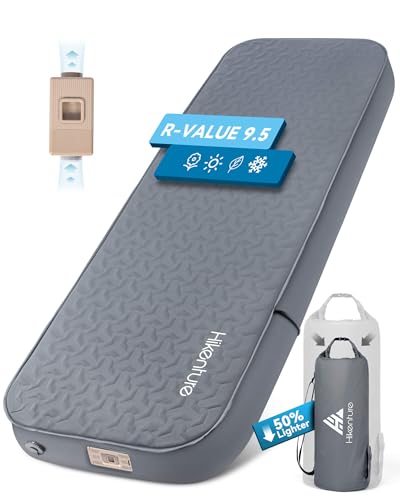
Modern outdoor sleeping gear has evolved far beyond stiff vinyl mattresses and razor-thin backpacking pads. Today’s high-performance camp pads incorporate features like rechargeable lithium-ion pumps, elastic 50D stretch-knit fabrics, and internal foam architectures boasting impressive 9.5 R-values. Choosing the right setup depends on whether you prioritize compact trunk storage, effortless entry height, or reliable all-night firmness that won’t wobble when your partner moves. Understanding how these two distinct sleep technologies handle temperature drops, ground friction, and field inflation ensures you stay warm and rested under the stars.
| Award | Product | AMG Score About AMG ScoreThe AMG Score is our own rating from 0 to 10, based on performance, design and build, ease of use, and value. It reflects independent research and is never influenced by manufacturers, retailers, or affiliate commissions. Learn more › | |
|---|---|---|---|
| Best Overall |
Hikenture 4-Inch Self-Inflating Sleeping Pad
|
9.2/10 | Buy |
| Best Value |
 LLUAII 4-Inch Self-Inflating Sleeping Pad |
9.1/10 | Buy |
| Best Budget |
 TaskStar 4-Inch Self-Inflating Camping Pad |
8.8/10 | Buy |
| Best Premium |
 Hikenture 4-Inch Self-Inflating Queen Sleeping Pad |
8.6/10 | Buy |
 OGERY 3-Inch Self-Inflating Sleeping Pad with Foot |
8.4/10 | Buy |
Hikenture 4-Inch Self-Inflating Sleeping Pad
The Hikenture 4-Inch Self-Inflating Sleeping Pad combines a plush 4-inch foam core with an automated electric pump for 90-second setup and quick push-button deflation. Featuring a listed 9.5 R-value and soft stretch-knit fabric, it is an excellent match for car campers and tent sleepers seeking dependable cold-ground warmth.
Pros
- Built-in electric pump provides hands-free 90-second inflation and automated deflation suction
- Deep 4-inch foam core cushions hips and shoulders effectively for side sleepers
- High listed R-value of 9.5 offers serious insulation against cold and damp ground
- Stretch-knit fabric surface reduces disruptive rustling and rubbery squeaks
- Generous 80-inch by 28-inch footprint provides ample room for taller outdoor sleepers
Cons
- Weighing 5.4 pounds, it is suited for car camping and vehicle setups rather than ultralight backpacking
- Relies on a built-in motorized pump mechanism that must be charged and maintained for off-grid setup
- Wide 28-inch single profile takes up considerable floor space inside narrow two-person backpacking tents
LLUAII 4-Inch Self-Inflating Sleeping Pad
The LLUAII 4-inch self-inflating camping pad pairs a plush, high-density foam core with a removable 1200mAh electric pump for effortless campsite setup. Offering a listed 9.5 R-value and a 600-pound weight capacity, it is a prime choice for car campers, truck bed sleepers, and cot users wanting deep comfort without wrestling manual valves.
Pros
- Detachable 1200mAh rechargeable pump eliminates the sweat of foot pumping or manual lung blowing
- Generous 4-inch thick foam core provides excellent pressure relief and body contouring for side sleepers
- Listed 9.5 R-value delivers top-tier thermal insulation against frigid tent floors and cold truck beds
- Internal TPU coating provides reliable moisture resistance and reduces noisy fabric squeaks when shifting positions
- Substantial 600-pound maximum weight capacity offers reliable structural support
Cons
- At 24 x 12 inches deflated, it is strictly intended for vehicle-supported camping and not suitable for backpacking
- Requires a 30-plus minute resting period after first inflation to allow vacuum-compressed foam to fully rebound
- Single 26-inch width may feel restrictive for restless sleepers who shift across wide angles
TaskStar 4-Inch Self-Inflating Camping Pad
The TaskStar 4-Inch Self-Inflating Sleeping Pad pairs a supportive memory foam core with an electric pump that inflates the bed in roughly 90 seconds. With a listed 9.5 R-value and 440-pound capacity, it provides outstanding ground-cold isolation and plush support for car campers, overlanders, and tent sleepers.
Pros
- High listed 9.5 R-value offers strong thermal protection against frozen or cold campsite ground.
- Included electric pump handles both rapid inflation and active deflation without manual pumping.
- Generous 80 by 30-inch sleeping footprint accommodates taller campers and side sleepers comfortably.
- Soft 50D stretch-knit fabric remains quiet and crinkle-free when turning at night.
- Comes equipped with a dedicated foam-filled pillow, charging cord, and travel storage bags.
Cons
- At 30 inches wide, it requires a sizable tent footprint and may not fit narrow solo backpacking tents.
- Requires keeping the electric pump charged via the included cable prior to off-grid use.
- Hybrid memory foam construction naturally packs larger than ultra-minimalist uninsulated air pads.
Hikenture 4-Inch Self-Inflating Queen Sleeping Pad
The Hikenture 4-Inch Queen Self-Inflating Sleeping Pad pairs high-density foam cushioning with an integrated electric pump for rapid 90-second campsite setup. Boasting a listed 9.5 R-value and a whisper-quiet stretch-knit top, it is an outstanding option for car camping couples and basecamp organizers seeking true cold-ground thermal protection.
Pros
- Generous 4-inch adaptive foam core provides plush cushioning against rocky terrain
- Exceptional listed 9.5 R-value delivers serious thermal insulation from freezing ground
- Integrated electric pump automates both rapid inflation and reverse-suction pack-down
- Soft stretch-knit top fabric prevents noisy rubber squeaks and movement rustle
- True Queen 80-inch by 60-inch dimensions comfortably accommodate two sleepers
Cons
- At 10.8 pounds, the unit is suited strictly for vehicle and basecamp use rather than backpacking
- Relies on a working electric pump mechanism for optimal hands-free setup speed
- Wide Queen footprint requires a spacious tent floor plan with low-angle wall clearance
OGERY 3-Inch Self-Inflating Sleeping Pad with Foot
The OGERY 3-Inch Self-Inflating Sleeping Pad pairs high-density foam cushioning with a built-in foot pump, delivering quiet insulation and steady support without needing an electric pump. It is an ideal sleep solution for car campers, tent campers, and cot sleepers looking for off-grid setup convenience.
Pros
- Integrated foot pump allows fast firmness fine-tuning without needing mouth inflation or electrical hookups
- High-density foam core deadens movement squeaks and insulates against cold ground surfaces
- Abrasion-resistant nylon construction paired with a textured non-slip bottom base
- Supportive three-inch thickness cushions pressure points for side, back, and stomach sleepers
Cons
- At 6 pounds, the pad is geared toward car and vehicle camping rather than ultralight backpacking
- Rolling up a dense foam-core self-inflating mat requires deliberate body weight to expel all trapped air during pack-down
- Manufacturer does not provide a reviewed ASTM F3340-18 laboratory R-value rating
Comparing Foam-Core Hybrids and Traditional Air Chambers
Selecting between an open-cell foam hybrid and a hollow inflatable bed defines how well you sleep during outdoor trips. Both designs aim to cushion your body from uneven terrain, but their internal engineering creates vastly different experiences in warmth, support, and campsite convenience. Understanding these structural distinctions helps you invest in the right gear for your vehicle capacity and cold-weather comfort.
Internal Construction: Open-Cell Foam Matrix vs. Hollow Air Chambers
The primary difference between these sleep systems lies in what sits inside the outer fabric shell. A traditional camping air bed consists of an empty inflatable cavity supported only by internal PVC trusses, I-beams, or air coils. When you fill an air bed, your body weight rests entirely on pressurized air that shifts around whenever you adjust your sleeping position. In contrast, a self-inflating mattress features an internal core of high-density open-cell foam bonded directly to airtight outer fabrics. This foam matrix acts like a sponge, expanding naturally to draw in air while providing continuous physical support across every square inch.
This structural difference dramatically alters the overall surface stability of your camp bed. Air beds often produce a distinct trampoline effect, wobbling and bouncing whenever you shift your weight or turn onto your side. Hybrid foam pads, such as three-inch or four-inch models from brands like Hikenture and LLUAII, eliminate that bouncy sensation by blending solid foam cushioning with pneumatic pressure. The foam deadens motion waves across the mattress surface, creating a firm foundation that feels much closer to a home mattress than a pool float. For light sleepers who wake up with every subtle movement, that internal foam damping makes a noticeable difference.
Thermal Efficiency and the Physics of Conductive Ground Chill
Ground temperature plays a decisive role in whether you sleep comfortably or shiver through the night in your tent. Standard PVC air beds lack internal insulation, leaving a massive volume of unheated air circulating directly beneath your torso. As the cold ground absorbs warmth through the bottom vinyl, convective currents inside the hollow chamber pull heat away from your body. Even an expensive down sleeping bag compresses beneath your body weight, losing its loft and leaving you vulnerable to that cold-sink effect. This phenomenon, often called cold bed syndrome, can leave campers shivering even when ambient air temperatures seem moderate.
Self-inflating camping mattresses solve this thermal challenge by trapping micro-pockets of air inside their high-density foam cores. Open-cell foam physically restricts air circulation, preventing convective currents from transferring heat into the frozen ground. Many premium four-inch camping mats, including models from TaskStar and Hikenture, achieve impressive 9.5 R-value ratings that block severe ground chill during shoulder-season or winter outings. Some designs, such as reversible pads from LLUAII, even feature dual-sided sleeping surfaces with cooling fabric on one side and heat-retaining fabric on the reverse. That dense thermal barrier allows campers to remain warm and cozy without needing bulky supplemental wool blankets under their sleeping bags.
Overnight Pressure Retention: Thermal Contraction vs. Structural Leaks
Waking up on a sagging mattress at dawn leads many campers to assume their bed has developed a catastrophic puncture. In reality, overnight firmness loss often stems from basic physics governed by Gay-Lussac’s law of thermodynamics. When you inflate an air bed during a warm afternoon, the air molecules inside remain energetic and fully expanded. As nighttime temperatures plunge after sunset, those air molecules cool and contract, drastically lowering internal chamber pressure. Hollow air beds show this pressure drop immediately, resulting in a loose, hammock-like sag that strains your lower back.
Self-inflating mattresses handle overnight temperature fluctuations with much greater resilience because their structure does not rely solely on air pressure. Even when cool nighttime air contracts inside the pad, the high-density open-cell foam core continues to provide structural support. The foam maintains its physical thickness and contours to your body, preventing your hips from sagging toward the hard floor. Furthermore, new vinyl air beds frequently experience material relaxation, where the fabric stretches naturally during initial inflation and mimics a leak. High-density foam mats wrapped in durable stretch fabric resist that artificial stretch, maintaining consistent sleeping support from dusk until dawn.
Sleeping Ergonomics, Weight Distribution, and Side-Sleeper Support
Sleeping posture heavily influences which mattress architecture delivers the best pressure relief in a tent. Side sleepers face particular challenges because their body weight concentrates heavily onto narrow contact points at the hips and shoulders. On an under-inflated traditional air bed, side sleepers frequently bottom out, forcing their joints against the hard tent floor. Conversely, over-inflating an air bed to prevent bottoming out creates a rigid, unyielding surface that pushes the spine out of neutral alignment. Finding the sweet spot between soft cushioning and reliable spinal support on an air-only mattress can be frustratingly difficult.
Four-inch foam hybrids solve this ergonomic dilemma by offering adaptive contouring that cradles pressure points without collapsing. Models from Hikenture, TaskStar, and LLUAII utilize multi-layered foam cores rated to support between 440 and 600 pounds without bottoming out. The foam absorbs pressure at the hips while gently filling the lumbar gap, promoting healthy spinal alignment for side and back sleepers alike. Some pads also incorporate integrated raised foam pillows to support the head and neck without requiring extra camp pillows. Even three-inch designs, such as the hybrid pad from OGERY, offer substantial pressure distribution that keeps joints ache-free after long hikes.
Motion Isolation and Tent Floor Noise Reduction
Sharing a tent with a partner or restless pet quickly exposes the motion transfer limitations of conventional air beds. When one person rolls over on a double air bed, displaced air surges across the interconnected chambers, bouncing the other sleeper. Couples often suffer from the roll-together trench effect, where weight differences create a sagging center valley that pulls both people inward. Traditional PVC surfaces also generate notorious rubbery squeaks whenever bare skin, nylon sleeping bags, or tent floor fabrics rub together. These friction noises can echo loudly through a quiet campground, disrupting sleep with every minor posture change.
Self-inflating foam mattresses excel at isolating motion and silencing annoying campsite noises. The internal foam matrix absorbs localized movement, preventing kinetic energy from rippling across to the other side of a two-person mat. Furthermore, modern foam sleeping pads utilize 50D stretch-knit polyester fabrics with internal TPU laminations rather than slick, noisy vinyl. These stretch-knit surfaces feel soft against the skin, breathe well in warm weather, and remain whisper-quiet when you toss and turn. Models with textured, non-slip base fabrics also grip tent floors securely, preventing the bed from sliding around inside the tent overnight.
Inflation and Deflation Mechanics in Primitive Campsites
Campsite setup workflows vary considerably depending on the inflation technology built into your chosen sleeping system. Traditional air beds require high-volume electric pumps, 12V vehicle adapters, or exhausting manual foot pumps to inflate their voluminous cavities. Arriving at a remote, dispersed campsite without electrical hookups can leave you struggling if your pump battery dies or cords fail to reach. Packing up an air bed can also be tedious, as trapped air resists folding unless you run a reverse-flow pump. Wrestling a stiff vinyl mattress into a undersized storage bag in the morning is a common camper frustration.
Self-inflating systems provide much more versatile setup options for off-grid outdoor recreation. When you open the wide-mouth valves on a foam pad, the compressed core naturally draws in air over several minutes. Many current models, such as those from Hikenture, LLUAII, and TaskStar, include detachable, rechargeable lithium-ion electric pumps that complete inflation in just 90 seconds. These compact 1200mAh pumps recharge via standard USB Type-C cables and provide up to seven inflation and deflation cycles per charge. The motorized deflation function actively pulls air out of the foam matrix, allowing you to compress the pad into a tight roll effortlessly.
Packability, Weight, and Vehicle Cargo Constraints
Transporting your camp bedding involves balancing packed cargo volume against personal comfort expectations. Hollow air beds pack down into surprisingly compact packages once fully deflated, making them attractive for campers with limited vehicle cargo room. Because an air bed contains no internal foam, its folded vinyl shell fits easily into small duffels or under trunk seats. This lightweight, space-saving characteristic allows families to transport multiple guest beds in compact sedans without crowding out coolers and camp stoves. For warm-weather trips where packing efficiency is paramount, an air bed offers undeniable convenience.
Self-inflating foam pads demand considerably more trunk space due to the physical volume of their high-density cores. Even when flattened using motorized deflation pumps, a four-inch queen or single foam pad rolls into a substantial bundle. For example, large foam pads compress down to roughly 24 by 12 inches, which consumes noticeable cargo capacity in an SUV or wagon. These mattresses are designed primarily for drive-up car camping, truck bed platforms, or rooftop tents rather than lightweight backpacking. Campers must evaluate their vehicle cargo limits before purchasing, recognizing that luxury foam support requires dedicated trunk real estate.
Durability, Puncture Vulnerability, and Field Maintenance
Rugged outdoor environments present constant hazards for inflatable bedding, from sharp gravel and pine needles to pet claws. Traditional air beds made from basic PVC vinyl are notoriously susceptible to pinhole punctures and seam delamination. When an air bed suffers a puncture, the entire structure deflates, dropping you directly onto rocks and roots for the remainder of the night. Locating a microscopic pinhole in a bulky vinyl mattress at camp requires soapy water and extensive patience. Even after finding the leak, field patch kits require clean surfaces and proper adhesive curing time to restore an airtight seal.
Self-inflating foam mattresses offer far superior fail-safe security when wilderness conditions turn rough. High-performance camping mats utilize heavy-duty 50D stretch fabrics backed by thermoplastic polyurethane laminates that resist punctures and abrasion. More importantly, if a self-inflating pad does suffer an accidental puncture, the compressed open-cell foam core still provides a protective cushion. You will not wake up lying flat against the cold ground because the foam itself maintains physical thickness without air pressure. Keeping valves free of sand, using a protective ground tarp, and storing the pad loosely unrolled during the off-season ensures years of reliable performance.
Choosing the Right Sleep System for Your Camping Style
Deciding between these two sleep architectures ultimately depends on your seasonal camping habits, vehicle space, and physical support needs. A traditional air bed remains a sensible choice for casual summer campers who prioritize high bed profiles and compact packed volume. If you camp exclusively in warm weather and need an elevated bed that is easy to stand up from, an air bed works well. However, you must pair it with a closed-cell foam topper or thick insulated blankets if night temperatures drop into the fifties or lower. Without supplemental insulation, cold ground conduction will sap your body heat regardless of sleeping bag quality.
A four-inch or three-inch self-inflating foam mattress represents the superior investment for year-round comfort, joint support, and cold-weather protection. Campers tackling shoulder seasons, overlanding in truck beds, or struggling with chronic back stiffness will appreciate the stable foam core and 9.5 R-value warmth. The inclusion of rechargeable USB pumps and rapid deflation features has largely eliminated the old hassle of rolling up stiff foam mats. By prioritizing thermal resistance, whisper-quiet fabrics, and fail-safe ergonomic support, you ensure every night spent under canvas leaves you recharged and ready for the trail ahead.
About the author
Jackson Lindeke is a Certified Sleep Science Coach and product expert specializing in mattresses, bedding and sleep products. He has years of experience developing evaluation methods and translating product-testing data into practical recommendations that help consumers choose products suited to their individual sleep needs.