
How to Make Sleeping on an Air Mattress Warmer: A Practical Guide for 2026
Learn how to make sleeping on an air mattress warmer during chilly nights with smart insulation tips and thermal layering advice for October 2026.
 By Jackson Lindeke
Updated October 5, 2026
By Jackson Lindeke
Updated October 5, 2026
Waking up in the middle of the night shivering is a common frustration for anyone sleeping on an uninsulated vinyl air bed. Traditional inflatable mattresses trap ambient room air inside a hollow plastic chamber, creating an active convection cycle that pulls warmth straight away from your body. Learning how to make sleeping on an air mattress warmer requires understanding this thermal transfer so you can block conductive heat loss before it disrupts your sleep cycle. Setting up a reliable air mattress for overnight guests or using an inflatable pad on a chilly camping trip should never force you to endure uncomfortable drafts or stiff joints.
Cold vinyl lacks natural thermal resistance, which means ambient drafts and cold flooring continuously chill the air beneath you. Creating an effective thermal barrier above and below the mattress restores neutral spinal alignment and prevents the severe muscular tension that often occurs when shivering in bed. Applying practical layering techniques, choosing dense foam materials, and establishing ground insulation can easily transform a freezing sleep surface into a cozy retreat.
| Award | Product | AMG Score About AMG ScoreThe AMG Score is our own rating from 0 to 10, based on performance, design and build, ease of use, and value. It reflects independent research and is never influenced by manufacturers, retailers, or affiliate commissions. Learn more › | |
|---|---|---|---|
| Best Overall |
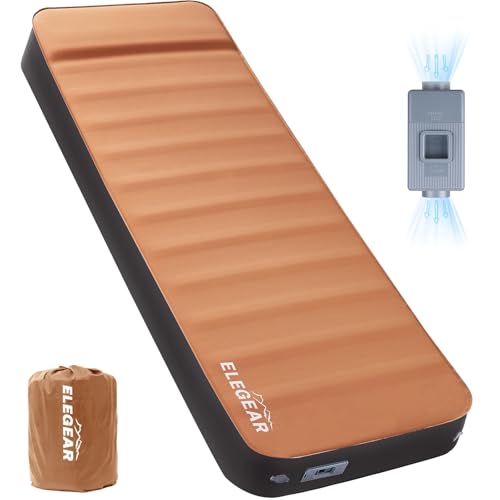
Elegear 4-Inch Self-Inflating Memory Foam Camping
|
8.8/10 | Buy |
Elegear 4-Inch Self-Inflating Memory Foam Camping
The Elegear 4-Inch Self-Inflating Sleeping Pad combines 26D hollowed memory foam with air cushioning and an integrated electric pump for rapid setup. Offering adjustable firmness and an impressive 9.5 R-value, this portable single mattress provides dependable ground insulation and pressure relief for side, back, and stomach sleepers needing temporary or outdoor bedding.
Pros
- Built-in electric pump allows one-touch inflation in roughly one minute and vacuum deflation in two minutes without manual pumping.
- Substantial 4-inch thickness and 26D memory foam core isolate sleepers from cold, uneven ground or firm flooring.
- Exceptional 9.5 R-value delivers reliable all-season thermal insulation against cold drafts and damp floors.
- Integrated pillow design saves pack space while supporting head and neck alignment.
- Rugged 50D knitted fabric with a TPU coating offers quiet, tear-resistant surface comfort compared to crinkly vinyl airbeds.
Cons
- Single sleeper dimensions (79 x 28 inches) are narrower than a standard Twin mattress, limiting lateral roll-around room.
- Electric pump runtime is rated for 20 minutes before needing a recharge, requiring users to monitor battery levels before trips.
- Low 4-inch profile sits close to the floor, making entry and exit more demanding than a traditional raised bed frame.
Thermal Science and Practical Strategies for Insulating an Air Mattress
Air mattresses present a unique thermodynamic challenge because their core consists of uninsulated, circulating air. Unlike standard mattresses with dense foam layers that retain warmth, an inflatable bed behaves like a large thermal heat sink. Understanding how conductive heat loss and internal air movement operate allows you to create effective insulation barriers. With the right adjustments, you can retain body heat, protect sensitive joints, and stay warm throughout chilly nights.
The Thermodynamics of Inflatable Mattresses: Why Vinyl Sleeps So Cold
Hollow air chambers inside inflatable beds create a continuous thermal bridge between your body and the surrounding room. As your body radiates warmth onto the sleep surface, the vinyl or PVC material rapidly conducts that heat into the internal air mass. The internal air warms near the top, cools against the bottom, and circulates in a continuous convection loop. This ongoing cycle continually pulls warmth away from your skin, leaving you cold even under blankets.
Ambient room temperature also plays a decisive role in how cold an inflatable bed feels. When an uninsulated mattress rests directly on cold flooring, the air inside the chamber drops to match the floor temperature. Standard vinyl offers an extremely low thermal resistance rating, providing virtually zero insulation against conductive heat loss. Without an insulating layer to interrupt this transfer, your body attempts to warm a large volume of circulating cool air.
Shivering on a cold mattress also compromises posture and disrupts restorative rest. Cold muscles naturally tense up to generate heat, causing morning stiffness across the lumbar spine, neck, and hips. Sleepers often curl into tight positions to preserve warmth, which distorts neutral spinal alignment and increases pressure points along the shoulders and pelvis. Solving the thermal deficit restores physical comfort, allowing your muscles to relax and recover properly.
Establishing a Ground Thermal Barrier Beneath the Mattress
Blocking heat loss starts at floor level before you even begin inflating your mattress. Placing a dense barrier beneath the air bed separates the cold foundation from the bottom vinyl skin. Thick wool rugs, moving blankets, interlocking foam exercise tiles, and closed-cell mats prevent the subfloor from draining warmth. If you frequently use camping air mattresses designed for outdoor insulation, laying a ground tarp beneath your setup stops ground chill and condensation simultaneously.
Reflective thermal blankets provide another lightweight, highly efficient option for sub-mattress insulation. Placing a radiant barrier with its metallic side facing upward toward the bottom of the air bed redirects radiant heat back into the chamber rather than into the floor. This method works especially well on tile or bare tent floors where conductive heat loss is severe. Ensuring the reflective sheet covers the entire mattress footprint prevents cold edge draft gaps from forming.
Elevating the air mattress completely off the ground offers the most dependable way to stop conductive cooling. Using a folding cot, an elevated platform, or a dedicated bed frame creates an air buffer between the floor and the mattress base. While ambient air still circulates underneath, it eliminates direct thermal conduction into dense materials like concrete. Combining an elevated base with a floor-length bed skirt traps stagnant air beneath the bed, cutting down convective drafts.
Creating Top Surface Insulation with Foam Toppers and Quilted Pads
Top-surface insulation provides the most immediate warmth because it creates a protective cushion between your skin and the cold vinyl surface. Memory foam toppers measuring two to three inches in thickness add valuable thermal resistance while improving ergonomic support. Viscoelastic foam absorbs body heat and holds it close to your core, cushioning sensitive pressure points along your shoulders and hips. The added layer also eliminates the rubbery feel of PVC, creating a surface that feels like a traditional mattress.
Natural wool mattress toppers and quilted cotton pads serve as exceptional breathable insulators for sleepers who need consistent warmth without stuffiness. Dense wool fibers trap stagnant air within tiny microscopic pockets, producing a high thermal buffer that keeps cold air from penetrating through. Wool also naturally regulates humidity, absorbing moisture while maintaining its insulating loft. If you share a double-height air bed for couples, adding a unified wool or quilted topper also helps dampen surface motion transfer whenever one partner shifts position.
Fitted fleece sheets and flannel bedding offer an affordable, packable alternative to bulky foam toppers. Standard cotton percale sheets feel icy to the touch in cold rooms, but brushed flannel and microfleece fibers provide instant surface warmth. Securing a thick, fitted mattress pad beneath the flannel sheet adds a dual-layer barrier that prevents cold vinyl contact entirely. Make sure your fitted sheets have deep elastic pockets to prevent the layers from shifting during the night.
Layering Bedding and Trapping Heat: The Trapped-Air Principle
The secret to staying warm on an inflatable sleep system relies on the trapped-air principle. Still air acts as one of the best thermal insulators available, which is why fluffy comforters and lofty quilts perform exceptionally well. Using multiple medium-weight blankets rather than a single heavy blanket creates tiny pockets of warm air between each fabric layer. A down comforter or high-loft synthetic duvet placed over a wool blanket builds an insulating shield that preserves your microclimate.
Blanket placement requires careful attention to avoid compressing the insulating materials underneath you. Heavy, tightly stretched sheets can crush the loft of down or synthetic fibers, reducing their ability to trap warm air pockets. You should tuck your sheets securely around the foot and sides of the air mattress, but leave enough slack across your body so quilts maintain full loft. This balanced setup keeps cold room drafts out while maximizing retained radiant warmth.
Draft exclusion around the perimeter of the mattress prevents chilly room air from infiltrating your sleeping space. Air mattresses naturally shift and flex under body weight, which can create open gaps where covers loosen and let cold drafts inside. Tucking a long bolster pillow or rolled fleece blanket along the sides of the mattress acts as a draft barrier. Sealing these draft pathways ensures that warm air stays trapped exactly where you need it.
Pre-Warming Techniques and Ambient Room Climate Adjustments
Pre-warming your air mattress before climbing into bed eliminates the initial chill that makes falling asleep difficult. Placing a rubber hot water bottle filled with warm tap water between your sheets twenty minutes before bedtime warms the bedding fibers effectively. Move the bottle around the middle and lower thirds of the bed so the lumbar and foot zones reach a comfortable temperature. Always ensure the water bottle is wrapped in a fabric sleeve to avoid direct contact with vinyl.
Managing the ambient climate of your room complements your mattress insulation efforts. Keeping the surrounding room at a moderate temperature between sixty-five and sixty-eight degrees prevents the air inside the mattress chamber from dropping into freezing territory. If you are sleeping in a drafty guest room, seal window sills and place door draft stoppers along baseboards. Small ceramic space heaters can warm the room evenly, provided they are positioned safely away from bedding.
Choosing appropriate sleepwear acts as your personal thermal barrier against residual surface coldness. Breathable thermal base layers made from merino wool or synthetic performance fleece wick moisture away from your skin while maintaining core body temperature. Wearing clean, dry wool socks prevents peripheral vasoconstriction in your feet, which is a primary reason sleepers wake up feeling chilled. Dressing in moisture-wicking layers ensures you stay warm without causing overheating or night sweats.
Choosing Insulated Self-Inflating Pads and High R-Value Air Beds
When traditional PVC air mattresses consistently fail to provide enough warmth, switching to an insulated self-inflating mattress pad solves the problem structurally. Advanced sleeping pads integrate open-cell or hollow memory foam structures directly inside the air chamber. These internal foam matrices block internal air convection entirely by trapping air within thousands of microscopic cells. As a result, the mattress prevents convective currents from circulating cold air away from your body, offering superior thermal stability.
Evaluating the R-value of an inflatable pad gives you an objective measure of its thermal resistance. Traditional hollow air mattresses rarely exceed an R-value of 1.0 to 1.5, meaning they provide virtually no defense against conductive cold. In contrast, modern designs like the Elegear Air & Foam Self Inflating Sleeping Pad 4″ incorporate 26D hollowed memory foam paired with air cushioning, achieving an R-value up to 9.5 for four-season warmth. This four-inch thickness creates a resilient thermal shield that blocks ground cold.
Self-inflating models equipped with built-in electric pumps also streamline the inflation process, reducing the physical effort needed to prepare your bed. The Elegear Air & Foam Self Inflating Sleeping Pad 4″ features a built-in electric pump that delivers one-touch inflation in approximately one minute and deflation in two minutes, backed by a twenty-minute pump runtime. Combining a built-in pillow, durable 50D knitted fabric, and an airtight TPU layer, this integrated construction eliminates cold spots while delivering firm, pressure-relieving support.
Common Heating Mistakes That Can Damage Inflatable Mattresses
Using improper heating methods can cause severe structural damage to an inflatable air mattress. Traditional vinyl, PVC, and TPU fabrics rely on heat-welded internal seams and baffles to maintain structural integrity and air pressure. Placing high-temperature electric heating blankets directly against bare vinyl can soften the plastic, weakening the seams and causing irreversible seam failure or air leaks. If you decide to use an electric heating pad or blanket, always place a thick insulating quilt between the heat source and the mattress surface.
Applying boiling water bottles directly onto synthetic mattress materials creates another significant hazard. Intense localized heat can stretch the vinyl membrane unevenly, resulting in permanent herniations or bubble formations across the sleep surface. These structural bubbles compromise spinal support by creating unsupportive lumps that throw your pelvis out of alignment. Always allow boiled water to cool slightly before filling hot water bottles, and inspect protective covers to prevent direct plastic contact.
Positioning space heaters too close to the perimeter of an air mattress introduces severe fire and puncture risks. Radiated heat from portable electric heaters can warp the outer sidewalls of the bed and weaken inflation valves, leading to rapid pressure drops overnight. Maintain at least three feet of clear space between any portable heating unit and your mattress bedding. Safe heating practices protect both the longevity of your inflatable bed and your bedroom environment.
Step-by-Step Overnight Setup Checklist for Maximum Warmth
Preparing your air mattress systematically ensures you build an airtight thermal defense before bedtime arrives. Begin by clearing the floor surface and inspecting the area for sharp debris, then lay down a dense base layer such as a moving blanket, wool rug, or foam tiles. This ground barrier arrests conductive cooling from the subfloor right from the start. Once your ground insulation is flat, position the uninflated mattress squarely over the center of the protective foundation.
Inflate the mattress to a balanced firmness that supports your posture without overstretching the internal seams. After reaching the desired firmness level, place your reflective radiant barrier or dense memory foam topper directly over the vinyl top surface. Cover the topper with a thick quilted mattress protector followed by a snug fitted flannel or fleece sheet. Smoothing out any folds in the topper ensures even pressure distribution and uninterrupted insulation under your hips and shoulders.
Complete your setup by layering lofty blankets and duvets in descending order of density, finishing with your lightest, fluffiest quilt on top. Tuck the perimeter bedding securely to eliminate draft pockets, and insert a fabric-covered warm water bottle into the sheets to preheat the sleep zone. Taking these deliberate steps transforms an otherwise chilly inflatable air mattress into an inviting, temperature-neutral sleep system that promotes deep, restorative rest regardless of ambient chill.
About the author
Jackson Lindeke is a Certified Sleep Science Coach and product expert specializing in mattresses, bedding and sleep products. He has years of experience developing evaluation methods and translating product-testing data into practical recommendations that help consumers choose products suited to their individual sleep needs.