
What Size Air Mattress Fits in a 4 Person Tent: Practical Guide for 2026
Determine what size air mattress fits in a 4 person tent with our layout and comfort guide updated for October 2026. Maximize interior floor space.
 By Jeremy Klein
Updated October 5, 2026
By Jeremy Klein
Updated October 5, 2026

Setting up camp after a long day on the trail often reveals an unexpected dilemma when tent floor dimensions clash with bulky sleeping gear. Campers frequently struggle to balance restful sleep with adequate storage room for backpacks, muddy boots, and clothing bags. When planning your shelter setup, knowing exactly what size air mattress fits in a 4 person tent determines whether you enjoy comfortable lumbar support or spend the night pressed against wet fabric walls. Standard four-person camping tents typically measure roughly eight feet by eight feet or nine feet by seven feet, which creates specific boundaries for your inflatable bedding choices. Exploring durable camping air mattresses helps you balance mattress width against the physical floor plan of your tent.
Selecting the correct mattress dimensions protects your spinal alignment while preventing the loss of vital livable space inside your shelter. A single queen mattress or two twin inflatables will physically fit inside most standard four-person domes, but vertical profile height and sloping tent walls significantly change how roomy the interior feels. If you share a shelter with a partner, finding an efficient air mattress for two adults ensures proper weight distribution without pushing your bedding into the curved corners where condensation gathers. Understanding these spatial dynamics allows you to select an air bed that delivers reliable pressure relief across your shoulders and hips without compromising campsite functionality.
Top Products
| Award | Product | AMG Score About AMG ScoreThe AMG Score is our own rating from 0 to 10, based on performance, design and build, ease of use, and value. It reflects independent research and is never influenced by manufacturers, retailers, or affiliate commissions. Learn more › | |
|---|---|---|---|
| Best Overall |
Intex Dura-Beam Standard Pillow Rest Queen Air
|
8.9/10 | Buy |
| Best Value |
 Intex Dura-Beam Standard Single-High Camping Air
|
8.8/10 | Buy |
 Intex Dura-Beam Standard Queen Camping Air
|
8.3/10 | Buy | |
| Best Premium |
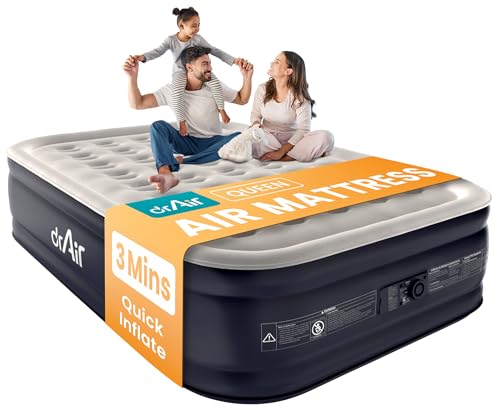 Dr. Air 18-Inch Queen Air Mattress
|
8.1/10 | Buy |
| Best Budget |
 Intex Dura-Beam Standard Downy Twin Camping Air
|
7.8/10 | Buy |
 Intex 64106E Dura-Beam Jr Twin Air Mattress
|
7.8/10 | Buy |
Intex Dura-Beam Standard Pillow Rest Queen Air
The Intex Dura-Beam Standard Pillow Rest Queen Air Mattress delivers low-profile 10-inch tent clearance, a 600-pound weight capacity, and Fiber-Tech internal stability. It is an affordable option for car campers and cabin guests with access to 110-120V power.
Pros
- Quick inflation and deflation in about 2.25 minutes via the integrated 110-120V AC electric pump.
- Fiber-Tech polyester fiber beams and bottom perimeter ring provide solid support up to 600 pounds.
- Low-profile 10-inch height fits easily under angled tent walls in standard dome tents.
- Velvety flocked sleeping surface feels soft to the touch and helps prevent sleeping bags from sliding.
Cons
- Requires a 110-120V AC outlet, requiring campers to bring an AC generator, vehicle inverter, or portable power station for tent use.
- Contains uninsulated air chambers without an official R-value rating, making an external foam sleeping pad necessary in colder weather.
- Natural material stretching during the first 2-3 nights will soften initial firmness and require minor air top-offs.
Intex Dura-Beam Standard Single-High Camping Air
The Intex Dura-Beam Standard Single-High Twin Air Mattress delivers dependable 10-inch elevated comfort and lightweight 3-pound packability for solo tent campers, scouts, and car campers. Built with Fiber-Tech polyester beams and a wide 2-in-1 valve, it offers solid non-sagging support at an accessible price point, provided you bring your own external camp pump.
Pros
- Fiber-Tech internal polyester fiber structure holds shape better than traditional hollow vinyl beams
- Lightweight 3-pound trail and trunk weight offers hassle-free transport to remote campsites
- Low 10-inch profile fits comfortably inside low-clearance backpacking and car camping dome tents
- Extra-wide 2-in-1 valve speeds up both inflation and complete morning deflation
- Soft flocked top surface keeps sleeping bags and sheets from sliding off during the night
Cons
- Requires a separate external air pump since no inflator or power adapter is included in the box
- Natural initial material stretching softens the mattress over the first 2-3 nights, requiring periodic top-offs
- Lacks internal thermal insulation or an ASTM R-value rating, requiring an insulated closed-cell foam pad for cold ground protection
Intex Dura-Beam Standard Queen Camping Air
The Intex Dura-Beam Standard Queen Air Mattress provides a low-profile 10-inch sleeping platform supported by internal Fiber-Tech polyester beams and a 600-pound weight capacity. It is an affordable, lightweight sleep option for weekend car campers and tent sleepers who already own a compatible campsite pump.
Pros
- Fiber-Tech polyester fiber construction helps maintain firmness and reduce sagging compared to standard vinyl beams
- Low-profile 10-inch height fits comfortably inside compact dome tents without touching sloped ceiling fabrics
- Generous 600-pound weight capacity and 80 by 60 inch queen footprint support dual campers with ease
- Lightweight 6.5-pound build packs down small for car trunk packing and weekend campground travel
Cons
- Air pump is sold separately, requiring you to bring your own 12V vehicle inflator, battery pump, or manual pump
- Material naturally stretches during the initial 2-3 nights of use, requiring top-off air to maintain firmness
- Lacks internal thermal insulation or a reviewed R-value, making a foam pad necessary over cold ground
Dr. Air 18-Inch Queen Air Mattress
Equipped with an integrated pump, this 18-inch elevated air bed inflates in roughly three minutes to offer quick, reliable sleeping arrangements for overnight guests. Its internal honeycomb pillar system maintains firmness and minimizes motion transfer throughout the night.
Pros
- Fast three-minute inflation with integrated pump
- Substantial 18-inch elevated profile
- High 800-pound maximum weight capacity
- Internal coil structure reduces motion transfer
- Includes convenient travel storage bag
Cons
- Relatively heavy at 18 pounds for travel
- Requires electrical power to run the pump
Intex Dura-Beam Standard Downy Twin Camping Air
The Intex Dura-Beam Standard Downy Twin is a lightweight 10-inch camping air mattress built with internal Fiber-Tech polyester fibers and a soft flocked top. It provides an affordable, low-profile sleeping solution for solo car campers, tent setups, and weekend cabin guests who bring their own air pump.
Pros
- Internal Fiber-Tech polyester beam structure provides firmer structural support than basic vinyl baffles
- Low 10-inch single-high profile fits cleanly beneath sloped tent walls without brushing condensation
- Velvety flocked top surface keeps bedding secure and feels pleasant against bare skin
- Extra-wide 2-in-1 valve speeds up deflation when packing camp before bad weather hits
- Lightweight 5.3-pound packed weight makes it easy to haul from the vehicle to the campsite
Cons
- Air pump is sold separately, so campers must supply their own manual, 12V, or battery inflator
- Initial vinyl stretching requires regular air top-offs over the first two to three nights
- Hollow uninsulated air chambers lack a verified R-value and feel chilly on freezing ground without a foam pad
Intex 64106E Dura-Beam Jr Twin Air Mattress
Built with internal polyester fibers for consistent support, this compact 10-inch single air bed serves solo campers and overnight guests well. Its velvety top enhances comfort, though you must supply your own air pump for inflation.
Pros
- Fiber-Tech design maintains shape under pressure
- Extra-wide valve allows rapid air flow
- Soft velvety top surface cleans easily
- Compact footprint fits easily inside smaller tents
Cons
- Air pump must be purchased separately
- Material stretches during initial use and requires reinflation
- Narrow 30-inch width limits sleeping space
Matching Air Bed Dimensions to 4-Person Tent Architecture
A standard queen size air mattress measuring 60 inches wide by 80 inches long represents the maximum practical size that fits inside a four-person camping tent while preserving perimeter floor space. Most recreational four-person tents provide a base footprint ranging between 56 and 64 square feet, which accommodates a single queen inflatable or two separate twin air beds. While a queen mattress fills roughly 33 square feet of floor area, choosing a lower-profile single-high mattress around 10 inches tall prevents the sleeping surface from crowding the sloping walls. Campers seeking individual sleeping zones can instead place two twin beds side by side, creating a central aisle that simplifies entry and gear organization.
Standard 4-Person Tent Floor Dimensions and Footprint Analysis
Tent manufacturers calculate nominal sleeper capacity by assuming campers sleep directly on narrow ground pads without luggage or personal space. A standard four-person tent typically features floor dimensions of eight feet by eight feet, nine feet by seven feet, or eight and a half feet by seven and a half feet. These dimensions yield between 56 and 64 square feet of gross floor area, which sounds spacious until you calculate actual sleeping furniture. Once you account for equipment duffels, footwear, and the natural taper of the tent fabric near the ground, the usable living zone decreases noticeably.
Angled dome poles cause interior tent volume to diminish rapidly as you move upward from the groundsheet. A tent footprint measuring eight feet by eight feet provides 96 inches of flat floor length, but the inward angle of the canopy reduces the usable ceiling width significantly. Placing an oversized mattress against the corners can force the inflatable surface against the rainfly, creating moisture transfer points during wet weather. Savvy campers measure both the flat ground dimensions and the angle of the tent walls before deciding which mattress dimensions will provide adequate clearance.
Evaluating Queen Mattress Layouts and Practical Clearances
A traditional queen inflatable bed, such as the INTEX 64149ED Dura-Beam Standard Pillow Rest Air or the Intex 64103E Dura-Beam Standard Single-High Air, measures approximately five feet wide and six point six feet long. In an eight-foot by eight-foot dome shelter, centering a queen mattress leaves roughly 18 inches of clearance on either side and approximately 16 inches at the foot of the bed. This setup creates dedicated walking paths along the sides of the shelter, which makes entering and exiting far easier during the night. It also provides sufficient room to stage dry backpacks, water bottles, and changing clothes without stacking gear on the bedding.
Couples who share a queen air mattress benefit from expansive horizontal space that supports natural sleeping positions. Side sleepers require shoulder and pelvic cradling to maintain proper spinal alignment, which is difficult to achieve on cramped camping pads. A queen platform offers 60 inches of lateral support, reducing the risk of rolling into cold tent fabric or disturbing a sleep partner during repositioning. If your shelter measures nine feet by seven feet, orienting a queen mattress across the seven-foot dimension leaves a generous two-foot corridor near the door for easy camp access.
Twin and Jr Twin Configurations for Modular Sleeping Zones
Selecting two individual twin mattresses offers far greater layout flexibility than committing to a single monolithic queen bed. A standard twin inflatable, like the Intex 64101E Dura-Beam Standard Single-High Air or the Intex 64757E Dura-Beam Standard Downy Air, measures roughly 38 to 39 inches wide and 75 inches long. Positioning two twin mattresses against opposite walls creates a functional center aisle where campers can stand, change clothes, or store communal camping containers. This modular setup prevents motion transfer entirely, ensuring that one restless sleeper will not bounce the other awake during the night.
Smaller campers or family groups can also incorporate specialized junior twin mattresses to maximize usable floor territory. The Intex 64106E Dura-Beam Prestige Downy Air features a junior twin profile that saves valuable width while still providing a supportive 10-inch elevated sleeping base. Arranging a standard twin alongside a junior twin leaves substantial open flooring inside a four-person shelter for dogs, heavy gear bins, or child play space. Modular single beds also make it simple to tailor firmness levels to individual preferences, allowing one camper to inflate their bed firmly for lumbar stability while another maintains a plush, contouring surface.
Solo campers or pairs seeking a middle ground between twin and queen footprints can also investigate camping double air mattress options for their shelter. A full or double mattress typically spans 54 inches wide by 75 inches long, saving half a foot of width compared to a standard queen. That conserved floor width translates into extra breathing room along the tent walls, which keeps sleeping bags away from condensation-prone corner seams. For four-person tents with narrower rectangular footprints, a double bed often strikes the ideal balance between sleeping comfort and walkway clearance.
The Critical Impact of Profile Height and Wall Slopes
Mattress thickness plays an equally critical role as length and width when outfitting a four-person camping shelter. Single-high air beds with a 10-inch profile, including the Intex Dura-Beam Standard series, preserve precious vertical clearance under sloping dome ceilings. At 10 inches off the ground, sleepers enjoy enough cushioning to keep hips and shoulders off the cold earth while retaining several feet of overhead room. This modest height allows you to sit upright comfortably on the edge of the mattress without brushing your head against the tent canopy.
Double-high raised mattresses, such as the Dr. air Queen Air Mattress with its 18-inch raised profile, offer home-like luxury and easier standing transitions for campers with knee or back discomfort. However, an 18-inch bed inside a dome tent pushes the sleeping surface upward into the rapidly narrowing portion of the shelter. In tents with aggressive wall angles, the top corners of a tall mattress may press against the inner mesh walls, reducing usable sleeping area and trapping moisture from damp morning air. Campers opting for raised double-high air beds will find they perform best in cabin-style tents with vertical walls rather than traditional aerodynamic dome shelters.
Internal Structural Support and Weight Capacity Ratings
Internal air bed engineering directly affects spinal ergonomics and joint pressure relief across a night in the woods. Traditional air beds rely on simple hollow chambers that often create an unsupportive sagging sensation beneath the lumbar region. In contrast, modern constructions utilize advanced internal tensioning systems to maintain flat, stable sleeping planes. Intex incorporates Fiber-Tech beam construction, which uses thousands of high-strength polyester fibers that do not stretch like conventional vinyl internal baffles. This engineering prevents the bed from forming a deep central dip, promoting neutral spinal posture for both back and side sleepers.
Heavy sleepers and multi-sleeper groups must also evaluate manufacturer weight limits to ensure durability over extended camping excursions. Standard twin models like the Intex 64101E and 64757E carry a 300-pound maximum weight capacity, which supports individual adults with stability to spare. Queen models such as the INTEX 64149ED and Intex 64103E support up to 600 pounds, making them dependable choices for two adults sharing a single platform. For sleepers requiring reinforced load-bearing performance, the Dr. air Queen Air Mattress features a premium honeycomb pillar design supporting up to 800 pounds, distributing body weight evenly across internal air columns to reduce motion transfer.
Inflation Mechanisms and Campsite Power Realities
Selecting an air mattress requires evaluating how you plan to inflate and deflate the bed at your campsite. Models like the INTEX 64149ED and the Dr. air Queen Mattress feature high-powered built-in electric pumps operating on standard 110-120V household current. These integrated systems inflate an entire queen bed in roughly two to three minutes with one-touch operation, eliminating manual pumping labor after a tiring drive. However, campers using built-in AC pumps must reserve an electric hookup campsite, carry a portable lithium power station, or pack an automotive power inverter to operate the motor.
Primitive campsites and wilderness areas require mattresses compatible with external manual or battery-operated inflation tools. Models like the Intex 64101E, 64103E, 64757E, and 64106E feature 2-in-1 valves equipped with extra-wide openings for rapid airflow. These valves accept high-volume hand pumps, foot bellows, or portable rechargeable air pumps, making them exceptionally versatile for off-grid travel. Wide-mouth valve openings also accelerate morning deflation, allowing campers to roll up their bedding quickly and pack their shelters without fighting trapped air pockets.
Material Stretching, Temperature Drops, and Pressure Loss
First-time air bed campers frequently complain that their mattress leaked overnight, when in reality the material simply experienced natural physical stretching. Manufacturer specifications clarify that new PVC and vinyl construction materials stretch under sleeper weight during initial inflation cycles. This stretching increases the interior volume of the mattress, causing a noticeable loss of surface firmness that mimics an air leak. Intex highlights that an air bed requires two to three nights of regular use to fully settle, after which the material stabilizes and maintains consistent internal pressure throughout the night.
Nighttime temperature drops also cause natural pressure fluctuations that affect sleep ergonomics. Cool outdoor air cools the air molecules trapped inside an inflatable mattress, causing them to condense and reduce overall firmness by morning. Insulating your body from cold ground temperatures is essential for continuous comfort and restful sleep. Reviewing top rated air mattresses for camping helps identify durable puncture-resistant materials and soft flocked tops that insulate against nocturnal chill. Layering an insulating foam pad or thick wool blanket beneath your fitted sheet prevents conductive heat loss while preserving surface firmness.
Puncture Resistance and Tent Floor Protection Protocols
Campsite terrain presents unique hazards for inflatable bedding that do not exist in indoor home environments. Pine needles, sharp twigs, burrs, and tiny gravel pebbles can puncture vinyl seams or base fabrics under sleeper pressure. High-grade models, like the Dr. air Queen Mattress, utilize puncture-resistant PVC formulated with thicker, waterproof barrier coatings to withstand outdoor friction. To prevent sudden punctures, always clear the ground beneath your tent thoroughly before staking out your footprint, removing all debris and loose stones.
Adding a protective barrier inside the tent floor provides an essential second line of defense for your inflatable mattress. Laying an inexpensive moving blanket, foam interlocking tiles, or a wool tarp over the tent floor shields your air bed from abrasive friction against gritty tent fabric. This protective underlayment also prevents the cold earth from drawing warmth away from the air chamber, improving thermal comfort during crisp autumn or spring nights. Taking these simple site-preparation steps preserves the lifespan of your mattress seams and ensures dependable support night after night.
Optimizing Interior Layouts and Door Clearance
Positioning your bedding correctly inside a four-person tent transforms how livable your shelter feels across a multi-day trip. Placing a queen mattress centered against the rear wall leaves the doorway clear, preventing campers from trampling bedding while entering with dirty boots. This layout creates dedicated corner pockets for gear duffels and allows unhindered airflow through ground-level ventilation ports. If your tent features dual doors on opposite walls, placing the mattress along one side preserves a clean walk-through lane between entrances.
When using two twin mattresses, positioning them along opposite sidewalls with heads toward the rear provides the most functional layout for two adult campers. The resulting central walkway allows each person to sit down, remove shoes, and crawl into bed without disturbing their camp partner. Communal gear bins can sit neatly against the back wall between the mattresses, keeping flashlights, books, and water bottles within easy arm reach. This thoughtful arrangement maximizes usable living space while ensuring each camper enjoys undisturbed, restorative sleep in the wilderness.
Final Practical Takeaway for Four-Person Tent Inflatables
Determining which air bed dimensions match your four-person tent comes down to balancing body support needs against interior livable space. A standard queen single-high mattress represents the most luxurious choice for couples, offering generous shoulder and hip support without overwhelming tent ceiling clearances. Campers prioritizing gear storage, individual movement isolation, or versatile layouts will find two twin or junior twin mattresses far more adaptable to varied campsite demands. Pairing low-profile 10-inch mattress heights with durable puncture-resistant fabrics ensures comfortable, ergonomically sound sleep that recharges you for every outdoor adventure.
About the author
Jeremy Klein is a sleep-product tester specializing in mattress evaluation, testing methodology and data collection. His experience across mattresses, pillows and bedding gives him a practical understanding of support, comfort, materials and performance factors that matter when comparing sleep products.