
What to Do If Air Mattress Has a Hole: Practical Repair Guide for 2026
Learn what to do if air mattress has a hole in November 2026, from finding pinholes to patching leaks and maintaining neutral spinal alignment overnight.
 By Logan Foley
Updated October 5, 2026

Waking up sinking into the floor with morning lower back stiffness often indicates an unwelcome loss of internal air pressure. When an inflatable bed loses its structural rigidity overnight, the natural alignment of your spine collapses into an unsupportive hammock shape that strains sensitive lumbar muscles. Knowing what to do if air mattress has a hole can rescue an unexpected sleep emergency during camping trips or guest visits. Before discarding a deflating bed, learning how to isolate pinholes and apply durable patches will restore reliable air retention.
A sudden deflation does not always mean your airbed is permanently ruined. In many instances, applying a reliable tape for air mattress punctures or using a dedicated vinyl cement patch can seal the leak in minutes. Distinguishing between normal PVC material stretching and genuine punctures also prevents unnecessary panic when a brand-new mattress feels soft after initial inflation. Taking a systematic approach to inspection and repair ensures your inflatable bed maintains comfortable, level support without collapsing midway through the night.
| Award | Product | AMG Score About AMG ScoreThe AMG Score is our own rating from 0 to 10, based on performance, design and build, ease of use, and value. It reflects independent research and is never influenced by manufacturers, retailers, or affiliate commissions. Learn more › | |
|---|---|---|---|
| Best Overall |
YENING 18-Inch Full Air Mattress
|
8.9/10 | Buy |
| Best Value |
 Amazon Basics 22-Inch Queen Air Mattress |
8.9/10 | Buy |
| Best Premium |
 GETFITREST Queen Air Mattress with Pump |
8.9/10 | Buy |
| Best Budget |
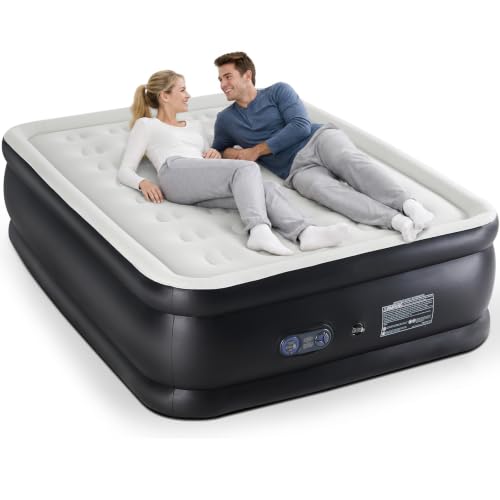 Sweetcrispy 22-Inch Queen Air Mattress |
8.8/10 | Buy |
 Amazon Basics Queen Air Mattress with Pump |
8.3/10 | Buy | |
 Intex Dura-Beam 22-Inch Queen High-Rise Camping |
8.3/10 | Buy | |
 OhGeni 20-Inch Raised Queen Air Mattress |
8.1/10 | Buy | |
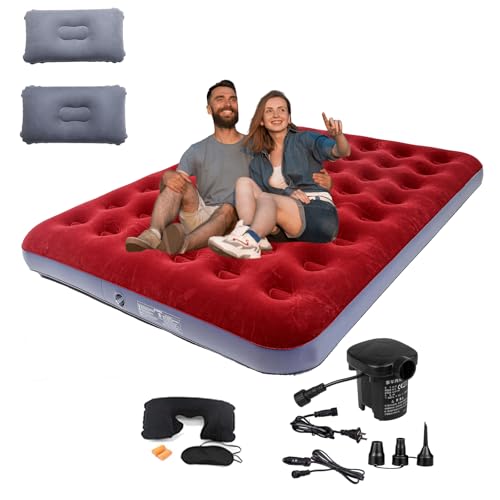 Onirii Queen Inflatable Air Mattress |
7.8/10 | Buy |
YENING 18-Inch Full Air Mattress
Elevated to an 18-inch height, this full-size airbed pairs an internal coil structure with an 800-pound weight capacity for reliable support. Its integrated electric pump automates inflation and deflation in approximately three minutes, making it a convenient choice for accommodating houseguests.
Pros
- Fast three-minute setup with one-dial electric pump
- Impressive 800-pound weight capacity accommodates two adults
- Elevated 18-inch height makes standing up easier
- Waterproof flocked top surface is soft and easy to clean
Cons
- Integrated pump requires nearby electrical outlet to operate
- Full-width mattress provides snug sleeping space for two adults
Amazon Basics 22-Inch Queen Air Mattress
Standing at a generous 22 inches, this elevated queen air mattress provides bed-like height and straightforward setup via an integrated electric pump. It holds up to 600 pounds and fits standard fitted sheets, making it well suited for overnight guests and car camping.
Pros
- Tall 22-inch profile mimics traditional bed height
- Integrated electric pump automates inflation and deflation
- Strong 600-pound maximum weight rating
- Standard dimensions fit regular queen bedding
- Includes custom carry bag for travel
Cons
- Relatively heavy at 16.75 pounds
- Built-in pump requires 110-120V electrical outlet
GETFITREST Queen Air Mattress with Pump
Equipped with an integrated electric pump, this 18-inch raised air mattress inflates in just three minutes for quick guest setup. Internal vertical coils and puncture-resistant PVC provide stable support for up to 800 pounds.
Pros
- Substantial 800-pound capacity with 40 support coils
- Fast three-minute setup with built-in pump
- Thick puncture-resistant three-layer PVC build
- Quiet flocked top minimizes motion noises
- Tall 18-inch profile allows easy entry and exit
Cons
- Requires air top-ups during initial material settling phase
- At over 16 pounds, it is somewhat heavy to carry
Sweetcrispy 22-Inch Queen Air Mattress
With an elevated 22-inch double-height design, this Sweetcrispy mattress inflates in four minutes using an integrated 110V electric pump. Its honeycomb structure supports up to 660 pounds, making it a supportive choice for home hosting or powered campsites.
Pros
- High 660-pound weight support
- Built-in electric pump allows fast setup
- Elevated 22-inch height provides bed-like feel
- Non-slip bottom reduces floor noise
- Comfortable moisture-wicking flocked top
Cons
- Requires a 110V power outlet to operate
- Weighs 17.4 pounds, limiting manual portability
- Larger footprint requires significant tent space
Amazon Basics Queen Air Mattress with Pump
Equipped with an integrated 120V pump and a sturdy 600-pound capacity, this queen bed simplifies setup for visiting guests or powered campsites. While its 9.5-inch profile sits relatively low to the ground, the lightweight build packs away easily into the included travel bag.
Pros
- Built-in 120V electric pump simplifies inflation
- High 600-pound weight capacity accommodates two adults
- Soft flocked top prevents bedding from slipping
- Weighs under 10 pounds for easy transport
Cons
- Low 9.5-inch profile sits close to the floor
- Main pump requires access to a standard 120V outlet
Intex Dura-Beam 22-Inch Queen High-Rise Camping
The Intex Dura-Beam 22-Inch Queen Air Mattress provides standing-height comfort and dependable Fiber-Tech internal support for electric-hookup campsites and cabin trips. With a built-in 110-120V electric pump and a 600-pound weight capacity, it is a great choice for car campers with access to AC power.
Pros
- High 22-inch elevation makes getting in and out of bed as easy as a traditional home mattress.
- Built-in 110-120V electric pump delivers quick, hands-free inflation and deflation in under five minutes.
- Dura-Beam Fiber-Tech construction provides reliable horizontal body support with a 600-pound limit.
- Velvety flocked finish adds surface comfort and helps reduce sleeping bag sliding.
Cons
- Integrated electric pump requires a standard 110-120V household outlet, campground electric pedestal, or portable AC power station.
- Tall 22-inch profile can press against angled walls in low-profile dome tents, requiring a standing-height cabin tent.
- Initial material stretching during the first few nights requires air top-offs before the vinyl fully settles.
OhGeni 20-Inch Raised Queen Air Mattress
The OhGeni 20-Inch Raised Queen Air Mattress features an elevated double-high profile, 35 internal coil-beam support points, and an integrated electric pump supporting up to 800 pounds. It is an excellent choice for home hosts, transitional movers, and visiting families seeking an easy-to-enter, dependable temporary bed.
Pros
- True 20-inch double-high elevation provides bed-like access that relieves joint and back strain
- 35 independent coil-beam support points reduce center sag and distribute weight better than basic open-beam designs
- Substantial 800-pound maximum weight capacity easily handles two adult sleepers
- Integrated electric pump simplifies setup and takedown with fast operation directly at the turn of a dial
- Dedicated 10-year product support policy backed by responsive manufacturer customer assistance
Cons
- PVC material naturally stretches during the first 2 to 3 nights of use, requiring a brief top-off to restore peak firmness
- Integrated electric pump requires standard household electrical access, making off-grid tent camping impractical without a power station
- At 18.3 pounds, the deflated mattress has noticeable heft that requires deliberate rolling for compact storage
Onirii Queen Inflatable Air Mattress
Designed for portable outdoor and indoor use, this queen air bed pairs a lightweight build with an all-in-one travel accessory bundle. Its dual-voltage electric pump and compact 7.5-pound weight suit road trips, tent camping, and temporary home hosting.
Pros
- Versatile pump supports both AC and DC car power
- Generous accessory bundle included in the box
- Lightweight 7.5-pound frame packs down small
- Cold-resistant material suited for chilly camping conditions
- Honeycomb internal structure provides even support
Cons
- Low 8.7-inch height sits close to the floor
- Must be kept out of prolonged direct sunlight
- Manual damp cloth cleaning required
Complete Step-by-Step Guide to Diagnosing and Fixing Air Mattress Holes
Discovering that an inflatable bed has lost air during the night is a frustrating scenario that can quickly disrupt restful sleep. Before assuming the bed is ruined, understanding the exact sequence for locating and sealing punctures can extend the life of your inflatable mattress. This practical guide covers everything from isolating microscopic pinholes to prepping flocked surfaces and sealing seams. Following a systematic repair protocol ensures that your mattress holds air reliably and supports your body without middle-of-the-night sagging.
Distinguishing True Air Leaks from Initial PVC Material Stretch
Many sleepers assume a new inflatable bed has a hole when it feels softer on the second or third morning. Synthetic materials like polyvinyl chloride (PVC) naturally stretch under continuous internal air pressure during the initial break-in period. Manufacturers like Intex and OhGeni explain that this settling phase takes two to three nights as the polymer chains relax. If your bed loses firmness without an active puncture, simply topping off the air volume allows the material to stabilize naturally.
Temperature fluctuations also cause perceived overnight pressure loss. When bedroom temperatures drop overnight, the air trapped inside the mattress contracts, reducing internal firmness. A mattress filled with warm daytime air can lose rigidity by dawn simply because the room cooled down. Before using patch kits, inflate the mattress fully in a climate-controlled room and monitor it for pressure drops without sleeper weight.
How Overnight Pressure Loss Distorts Spinal Alignment and Joint Support
Sleeping on an underinflated air mattress creates an exaggerated center dip known as the hammock effect. Because the pelvic region carries roughly half of an adult sleeper’s total weight, an unpressurized chamber allows the hips to sink excessively. This unnatural curvature hyperextends the lumbar spine and places uneven strain on lower back muscles. Waking up with lower back tightness or hip joint compression is frequently a direct consequence of overnight pressure loss.
Proper internal pressure is critical for engaging modern support systems like vertical air coils and horizontal beam designs. Models like the GETFITREST Queen use forty reinforced vertical air coils, while Intex relies on high-strength polyester fibers in its Dura-Beam structure to distribute body weight. When a puncture lets air bleed out, these internal structures lose the baseline rigidity needed to hold your spine level. Maintaining proper inflation pressure ensures your joints stay cushioned while your spine remains in neutral alignment.
Proven Detection Methods for Finding Invisible Pinhole Leaks
Locating the exit point of escaping air requires methodical inspection, especially with microscopic pinholes. The most reliable technique involves applying mild soapy water to an inflated mattress using a spray bottle or damp sponge. Mix a few drops of dish soap with warm water and gently wipe down the seams, valves, and flat panels. Escaping air will rapidly create visible soap bubbles directly over the source of the leak, pinpointing the puncture within seconds.
If you lack soap or want to keep the mattress dry, sensory inspection is an effective alternative. Inflate the bed to maximum capacity in a quiet room, then slowly move your cheek or the back of your hand one inch above the vinyl. Escaping air creates a distinct hissing sound and produces a localized cool draft against sensitive skin. You can also press gently across different sectors of the mattress to accelerate airflow through hidden fissures.
For portable camping pads or compact models, water submersion provides complete precision. Inflate the mattress partially, fold it slightly to increase internal pressure, and submerge sections in a bathtub. Look for a steady stream of rising bubbles marking the exact coordinate of the puncture. Once you identify the hole, dry the surrounding surface immediately and mark the spot with a permanent marker.
Step-by-Step Repair Process for Smooth PVC and Vinyl Surfaces
Patching a smooth vinyl underside or side wall is straightforward once the puncture is marked. First, deflate the mattress completely so escaping air does not compromise the adhesive bond. Clean the area around the hole thoroughly with isopropyl alcohol to remove dust, skin oils, and residues. Allowing the cleaned vinyl to dry completely creates a receptive surface for secure bonding.
Cut a durable vinyl patch into a circular or oval shape extending at least one inch beyond the hole in all directions. Rounding the corners prevents sharp edges from catching on bedding and peeling over time. Apply a uniform layer of specialized PVC cement to both the patch and the damaged area. Press the patch firmly onto the puncture, smoothing outward from the center to eliminate air bubbles and ensure an airtight seal.
Place a flat, heavy object like a book or weight plate directly on top of the patch during initial drying. Consistent downward pressure prevents the edges from curling as the adhesive solvent cures. Let the repair rest undisturbed according to manufacturer directions, typically requiring eight to twelve hours for a full cure. Rushing the drying process by inflating the bed too early is the primary cause of repair failure.
How to Patch Leaks on Soft Flocked Sleeping Tops
Repairing a leak on the velvety flocked top of an inflatable bed requires special preparation because glues cannot bond directly to fuzzy fibers. Applying a patch over flocked fibers creates microscopic air channels that allow air to seep out underneath. To establish an airtight seal, you must first remove the velvety flocking around the puncture to expose the smooth vinyl base. This step requires a gentle touch to avoid tearing the underlying PVC membrane.
Use fine-grit sandpaper, such as 220-grit, or an emery board to gently buff away flocking fibers in a small circle around the hole. Alternatively, a small amount of acetone on a cotton swab can dissolve the flocking adhesive for easy scraping. Continue buffing until you have a smooth, clean vinyl circle extending roughly one inch around the puncture. Wipe away all residual dust with an alcohol wipe, then let the spot dry.
Once the raw vinyl is exposed, apply your patch using polyurethane adhesive or a flexible vinyl sealant. The smooth base provides a secure anchor, preventing air from tracking under the patch margins. For added security on guest beds, incorporating reliable adhesive tape solutions for vinyl across the perimeter reinforces the patch against friction from moving sheets. Allow the repaired surface ample time to cure before testing the bed with full body weight.
Inspecting Air Valves, O-Rings, and Built-in Electric Pumps
Not every loss of internal air pressure originates from a puncture in the outer PVC skin. Valves and integrated electric pumps contain moving mechanical parts, rubber gaskets, and sealing rings that can fail or become misaligned. Dual-chamber valves, such as those found on camping models like Onirii, rely on rubber flaps to prevent backflow during inflation. Dust, pet hair, or sand trapped within these assemblies can prevent the rubber gasket from seating flush against the housing.
To diagnose valve leaks, apply soapy water around the valve collar and pump dial while the bed is inflated. If bubbles form around the perimeter of the pump dial, inspect the internal rubber O-ring for dryness, cracking, or debris. Cleaning the rubber seal with a damp cloth and applying a tiny dab of pure silicone grease can restore flexibility and seal minor micro-gaps. Make sure the manual valve cap threads cleanly and closes completely without cross-threading.
Choosing Between Liquid Adhesives, Peel-and-Stick Patches, and Specialized Tapes
Selecting the appropriate repair material determines whether your patch lasts for a single night or several years. Peel-and-stick clear vinyl patches are convenient emergency options for quick field fixes during camping trips. However, pressure-sensitive adhesives often degrade under repeated folding, high humidity, or temperature extremes. For a permanent structural repair, liquid polyurethane cements or PVC solvent glues chemically weld the patch directly to the mattress body.
Specialized waterproof repair tapes engineered for inflatables offer an excellent middle ground between quick stickers and slow-curing glues. These elastomeric tapes stretch and contract naturally alongside the mattress PVC, resisting shear forces generated when someone sits on the edge. If you frequently accommodate overnight visitors on a durable air mattress for guest rooms, keeping an emergency repair kit with heavy-duty tape and vinyl cement in the storage pouch guarantees rapid problem solving.
Avoid common household temporary fixes like standard duct tape, packing tape, or hot glue guns. Standard duct tape contains rubber-based adhesives that dry out, leave sticky residue, and fail completely under internal air pressure. Hot glue guns emit excessive heat that melts through thin vinyl walls, expanding a tiny pinhole into an irreparable tear. Stick strictly to adhesives formulated for flexible polyvinyl chloride or thermoplastic polyurethane.
Pressure Testing and Setting Curing Times for Long-Term Durability
Patience during the curing phase is crucial to achieving a permanent seal that withstands adult body weights. While quick-drying adhesives may feel dry to the touch within thirty minutes, the internal chemical bond requires extensive curing to resist shear forces. Manufacturer specifications for quality vinyl adhesives consistently suggest letting patches cure undisturbed for twelve to twenty-four hours before inflating the bed. Rushing this window risks blowing out the freshly set adhesive seal the moment someone lies down.
Once the designated cure time has passed, conduct a two-stage pressure validation test before placing sheets back on the bed. First, inflate the mattress to approximately eighty percent capacity and let it rest for one hour to monitor initial seal integrity. If the patch holds firmly, inflate the bed to full operational firmness and apply gentle body weight across the repaired area. Listen closely for faint hissing sounds and check the patch perimeter to ensure no edges have begun to separate.
Structural Failures and Seam Blowouts: When to Repair Versus Replace
While pinholes and flat punctures are easily salvageable, structural seam blowouts present a much more challenging repair scenario. The welded seams of an air bed endure concentrated tension, especially on elevated beds supporting high weight capacities like Sweetcrispy models rated up to 660 lbs. When a factory weld separates along a curved seam or an internal coil weld snaps, a topical patch rarely withstands the focused pressure. If a seam rupture exceeds two inches or involves an internal baffle tear, replacing the mattress is generally the safest course.
Internal baffle ruptures cause the mattress surface to balloon upward into an awkward dome, completely destroying ergonomic lumbar support. Attempting to force an irregular bubble back into shape with external tape or glue is impossible because internal ties have physically severed. Sleeping on an air bed with broken internal coils causes extreme spinal misalignment and can lead to severe back aches. When an older mattress develops widespread vinyl cracking or multiple seam tears, investing in a fresh, puncture-resistant model offers better spinal health and undisturbed rest.
Practical Care Habits to Prevent Future Air Bed Punctures
Preventative maintenance and thoughtful storage habits significantly reduce the likelihood of developing punctures in the future. Always inspect the floor or tent ground thoroughly for sharp debris, stray staples, tiny pebbles, or wood splinters before unrolling the mattress. Placing a thick moving blanket or specialized groundsheet underneath creates an essential barrier against abrasive friction. Furthermore, keep sharp pet claws away from unprotected vinyl, or lay down a heavy quilt over the top flocking to protect against accidental tears.
Proper folding and deflation habits also protect internal coil structures and external seams from premature fatigue. Never force air out of the mattress by folding it aggressively while the valve is closed, as internal pressure spikes can burst delicate seam welds. Instead, let the integrated electric pump exhaust the air naturally until the mattress lies flat, then fold it loosely according to factory guidelines. Storing the folded bed inside a canvas carry bag in a temperature-stable closet prevents the vinyl from turning brittle over cold winters.
Taking swift, methodical action when an air bed loses pressure saves money, avoids middle-of-the-night discomfort, and extends the usable life of your temporary bedding. By accurately locating the defect, prepping the material surface, and applying a quality patch designed for flexible PVC, you can restore dependable support for your next camping trip or houseguest visit. A properly sealed mattress protects your spinal alignment, keeps your lower back comfortable, and ensures you wake up fully rested instead of sinking into the bedroom floor.
About the author
Logan Foley is a Certified Sleep Science Coach and experienced mattress and sleep-product researcher. She has personally evaluated hundreds of mattress models, with expertise in comparing construction, comfort, support, materials and sleeper needs to turn complex product differences into practical buying guidance.