
Do I Need Deep Pocket Sheets? A Practical Guide
Do I need deep pocket sheets? Check mattress depth, toppers, and fitted-sheet measurements to choose a secure fit for November 2026.
 By Jeremy Klein
Updated November 6, 2026
A fitted sheet that pops off a corner can turn bedtime into a nightly adjustment. The answer to do i need deep pocket sheets depends mainly on the height of your mattress, plus any topper or pad you leave on the bed. A deeper pocket is useful when a standard fitted sheet cannot reach beneath the mattress securely, but buying the deepest option by default can leave excess fabric and a loose fit.
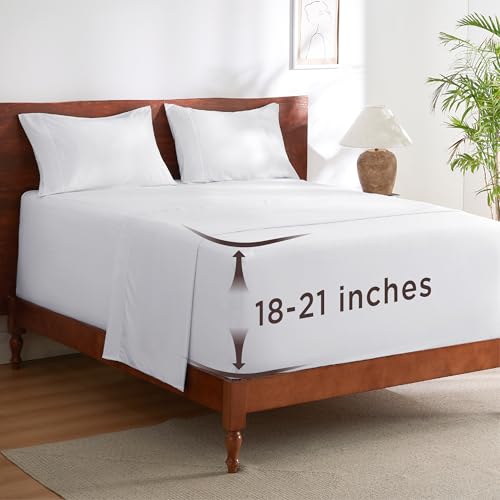
Measure the complete sleep surface before ordering, then compare that measurement with the sheet maker’s stated pocket depth and fit range. The products listed below include two Bedsure queen sets described for mattresses up to 21 inches thick and a DeaLuxe fitted sheet described for a narrower mattress-depth range. If you’re also comparing sheet materials, this silk sheet set overview offers a related way to explore bedding choices.
| Award | Product | AMG Score About AMG ScoreThe AMG Score is our own rating from 0 to 10, based on performance, design and build, ease of use, and value. It reflects independent research and is never influenced by manufacturers, retailers, or affiliate commissions. Learn more › | |
|---|---|---|---|
| Best Overall |
 Bedsure Deep Pocket Queen Sheets Set |
8.4/10 | Buy |
 Bedsure Deep Pocket Queen Sheets Set |
8.3/10 | Buy | |
| Best Budget |
 Grey Fitted Sheet Queen Only |
7.8/10 | Buy |

How to tell whether deep pocket sheets are necessary
Deep pocket sheets are worth considering when your mattress, together with any topper or padded protector, exceeds the usable pocket depth of a standard fitted sheet. The key is not the label alone. It is whether the elasticated corners can travel down the sides and hold beneath the mattress without strain.
A thicker mattress does not automatically require deep-pocket bedding if the sheet’s stated fit range already covers its total height. Conversely, a mattress that seems close to standard thickness may need a deeper pocket after adding a plush topper. Measure the entire stack you plan to keep on the bed, not just the mattress by itself.
Measure the mattress and every layer on top
Use a tape measure to check the mattress from its bottom edge to its top surface, keeping the tape straight rather than following a rounded seam. If a topper or padded protector will stay in place under the fitted sheet, include its height in the total. A thin, smooth protector may add little, while a thick quilted pad can noticeably change the fit.
Take the measurement with the bed arranged as you use it. A topper that gets added later can make a previously secure sheet too shallow, and removing a topper can leave an oversized pocket slack. If mattress edges are pillow-topped or noticeably rounded, note that too, since a fitted sheet needs enough fabric to pass over the corner and remain tucked beneath it.
Check more than one side if the mattress has an uneven surface or the bedding layers are not centered. Record the greatest practical height, then compare it with the manufacturer’s fit guidance. That comparison is more useful than relying on terms such as “deep” or “extra deep,” which do not always describe the same measurement across brands.
Read pocket depth as a fit range, not a guarantee
Product descriptions may state a maximum mattress thickness, a pocket depth, or a suggested range. Those figures are not interchangeable in every listing. A sheet advertised to fit a mattress up to a particular thickness is giving a useful selection limit, while a pocket measurement describes the depth of the fitted corner fabric. Read the full listing so you know which specification is being provided.
Elastic can help a fitted sheet grip, but it cannot compensate for a pocket that is too shallow for the complete mattress setup. A sheet at its stated maximum may also feel tighter than one used on a shorter mattress. If your measurement is close to the listing limit, consider the topper, mattress shape, and how much fabric needs to tuck underneath before deciding.
Do not assume that a deeper pocket will fit every bed better. Excess material can bunch along the sides or leave the surface less taut, especially if the mattress is much shorter than the sheet’s intended range. The practical aim is adequate depth with enough elastic tension to keep the sheet in place, not the largest number printed on the package.
What the listed sheet options specify
The supplied product details give two different approaches: full queen sheet sets with deep pockets, and a fitted sheet sold on its own. Their listed sizing and fit claims can help narrow a choice, but the product descriptions do not provide every detail a shopper might want, such as a universal measurement method for pocket depth. Confirm the live listing and your mattress measurements before ordering.
Bedsure sets for a mattress and topper combination
The mattress height and support discussion can help frame why a mattress setup may include different layers, but sheet sizing still comes down to the actual combined height on your bed. The Bedsure Deep Pocket Queen Sheets Set in dark grey and the white version are both described as fitting mattresses up to 21 inches thick. Each listing specifies a queen fitted sheet measuring 60 by 80 inches, a flat sheet, and two pillowcases.
These are complete sets, which may suit someone replacing more than the fitted sheet. The product descriptions also mention full elastic, brushed fabric, pintuck detailing, and moisture-wicking treatment. Those are manufacturer-listed features, not a substitute for checking the fit range against your own mattress and topper.
Choose between the two Bedsure listings based on the offered color and current listing details rather than assuming their fit specifications differ. Both are described with the same maximum mattress thickness. If your mattress plus topper is within that stated limit, the depth claim is relevant; if the combined stack exceeds it, do not treat the sheet as a confirmed fit.
DeaLuxe fitted sheet for replacing one layer
The Grey Fitted Sheet Queen Only is a fitted-sheet-only option, so it does not include a flat sheet or pillowcases. Its listing calls it a 16-inch deep-pocket sheet and identifies a recommended mattress range of 14 to 18 inches. That distinction matters: someone who needs only a replacement fitted sheet may not want to buy an entire set, while a shopper outfitting a full bed may prefer a set.
The product description also says the sheet is made from double-brushed microfiber and has reinforced elastic. Those details may matter to buyers who value a soft-feeling fabric or want the fitted edge held snugly, but they do not establish how the sheet will feel to every person or how it will behave on every mattress. Use the stated depth range as the primary fit check.
One detail in the supplied listing is confusing: it includes broader statements about 21-inch pockets alongside the named 16-inch option and the 14-to-18-inch recommendation. Because the product is identified here as the 16-inch version, verify the selected variation and its exact current specifications before buying. Do not rely on a general description if the chosen option’s measurement is unclear.
Signs your fitted sheet is too shallow or too deep
A shallow sheet often announces itself through recurring corner lift. The elastic may pull upward during ordinary movement, the fabric may creep off the mattress edge, or the corners may be difficult to stretch into place. A sheet that only stays on when pulled very tightly is also a warning that the pocket may not allow enough room for the mattress stack.
A sheet that is too deep can create a different nuisance. Loose fabric may wrinkle or gather along the mattress sides, and the fitted surface may feel less smooth even after careful placement. This does not always mean the sheet is unusable, but it suggests the pocket range may be larger than your setup needs.
Before replacing a sheet, check that it is positioned correctly and that the corners match the mattress shape. Confirm the mattress and topper are centered, then pull the fitted corners evenly rather than stretching one side excessively. If the same corner continues to slip after a careful reset, compare your total height with the product’s specified range.
Consider mattress shape and bedding layers
Mattresses with rounded corners, pillow tops, or thick sewn borders may require more fabric to cover their shape than a flat edge of the same measured height. A topper can also shift, creating an uneven surface that makes a fitted sheet appear too small. Center the layers and assess the fit after the bed is fully made before concluding that pocket depth alone is the cause.
Protectors and pads can change the effective height, while a thin fitted protector may not add enough bulk to matter. Include anything substantial that lies under the sheet, particularly quilted padding. If you frequently change the setup, such as using a topper only in colder months, one sheet depth may not provide the same tension in both arrangements.
Sheet sizing also depends on the mattress footprint, not only its depth. A queen sheet designed for a queen mattress may be too narrow or short for a different mattress size, regardless of pocket depth. Confirm the size label and the flat dimensions where provided, especially when shopping for unusual, split, or oversized bedding configurations.

Choosing between a full set and a fitted sheet
The right purchase depends on what needs replacing. A set is convenient if you want coordinated pillowcases and a flat sheet along with a fitted sheet, while a fitted-only product can avoid buying pieces you already own. Think about the condition and size of your existing bedding before treating a multi-piece set as the automatic choice.
For the listed Bedsure options, the queen set includes a fitted sheet, flat sheet, and two pillowcases. The DeaLuxe option is described as a queen fitted sheet only. That is a clear practical distinction even before comparing colors, fabric details, or pocket range.
Material preferences are personal. The Bedsure descriptions identify brushed fabric and a moisture-wicking treatment, while DeaLuxe describes double-brushed microfiber. These descriptions can help you shortlist products, but they do not establish a precise temperature effect or guarantee a particular feel for every sleeper. If you sleep hot, consider the complete bedding setup and room conditions rather than assuming a sheet feature alone will resolve overheating.
Match the depth to your usual bed setup
If your mattress is relatively low-profile and you do not use a topper, a standard pocket may be enough when its stated range covers the measured height. A deep-pocket option becomes more relevant as mattress thickness and added layers increase. The point is to select a sheet that reaches under the mattress with a little room to spare, without leaving a loose excess of fabric.
Buyers near a product’s upper limit should be especially careful. Measurements can be affected by seams, padding, and how the mattress sits on its foundation, so a listed maximum should not be treated as a promise that every mattress at that height will feel equally easy to dress. Read the seller’s fit notes and return terms if the fit is uncertain.
If your mattress height changes because you add or remove a topper, reassess the fitted sheet rather than assuming the old choice remains ideal. A sheet that was snug on the bare mattress may become strained once the topper is added. A sheet selected for the taller arrangement may be slack when the topper is removed.
Care and fit checks after the first wash
Follow the care instructions on the product label, since fabric blends and finishes may have different washing guidance. Avoid assuming that all microfiber or brushed sheets should be treated identically. Care that follows the label is the most reliable way to protect the fabric and elastic without guessing about temperature or drying settings.
After laundering, let the sheet settle on the mattress and check each corner again. If it feels tighter than before, confirm that it is fully dry and oriented correctly, then compare the fit with the original measurements. A small change in how the sheet is pulled can make one corner seem strained even when the pocket depth is adequate.
Keep the product packaging or order information until you have confirmed the size and fit. If the listing offers multiple depth variations, make sure the delivered item matches the selected option before removing tags or discarding packaging. Product descriptions can combine general brand information with details for individual variations, so the selected item’s exact specification deserves a final check.
A practical way to decide
Start with a measurement of the mattress and every substantial layer that will sit beneath the fitted sheet. Compare that total with the specific sheet’s pocket depth or stated mattress-height range, then account for any uncertainty around mattress shape or a topper. This simple check answers the central question more reliably than choosing by the words “deep pocket” alone.
The Bedsure queen sets are described for mattresses up to 21 inches thick and provide a complete set, while the DeaLuxe listing identifies a fitted-only option with a 16-inch pocket and a stated 14-to-18-inch range. Those distinctions offer a starting point, not a universal fit guarantee. Check the exact selected variation and product details before purchasing.
If a fitted sheet repeatedly slips, first reset the corners and confirm that the mattress layers are centered. Then compare the measured total height with the sheet’s stated range. Choose deep-pocket bedding when that comparison shows a standard pocket would be strained, and avoid extra depth when it would leave the fitted surface loose.
About the author
Jeremy Klein is a sleep-product tester specializing in mattress evaluation, testing methodology and data collection. His experience across mattresses, pillows and bedding gives him a practical understanding of support, comfort, materials and performance factors that matter when comparing sleep products.