
How to Make a Memory Foam Mattress Sleep Cooler: Practical Solutions for 2026
Learn how to make a memory foam mattress sleep cooler with proven airflow tips and breathable sleep upgrades updated for November 2026.
 By Jeremy Klein
Updated October 13, 2026

Viscoelastic memory foam conforms closely to natural body curves, delivering deep pressure relief across the hips and shoulders. However, the dense cellular structure that produces this contouring feel often restricts continuous airflow, trapping body heat throughout the night. Learning how to make a memory foam mattress sleep cooler allows warm sleepers to preserve essential spinal alignment without suffering through chronic night sweats. Finding the right balance between body-cradling contour and temperature neutrality transforms a suffocating bed into a restorative sleep environment.
Many sleepers experience excessive warmth because their body sinks too deeply into dense foam layers, effectively creating an insulating thermal pocket. Addressing this microclimate challenge requires a multifaceted approach involving breathable bedding, foundation adjustments, and specialized surface toppers. Choosing supportive mattress options for heavier sleepers or pairing dense mattresses with airflow-promoting layers helps maintain balanced support while preventing excessive thermal buildup. By making targeted structural and bedding upgrades, you can dramatically improve overnight comfort.
| Award | Product | AMG Score About AMG ScoreThe AMG Score is our own rating from 0 to 10, based on performance, design and build, ease of use, and value. It reflects independent research and is never influenced by manufacturers, retailers, or affiliate commissions. Learn more › | |
|---|---|---|---|
| Best Overall |
WhatsBedding 4-Inch Queen Mattress Topper
|
9.1/10 | Buy |
| Best Value |
 Best Price Mattress 1.5-Inch Memory Foam Topper |
8.9/10 | Buy |
WhatsBedding 4-Inch Queen Mattress Topper
Combining shredded memory foam with cooling gel filling, this 4-inch topper adds plush ergonomic cushioning to stiff mattresses. Four corner anchor straps and dot quilting keep the thick fill evenly distributed without shifting overnight.
Pros
- Generous four-inch thickness provides noticeable pressure relief
- Blends cooling gel with supportive shredded memory foam
- Corner anchor straps keep the topper securely positioned
- Quilted design prevents lumps and uneven fill
Cons
- Requires up to 24 hours to fully expand
- Needs manual fluffing to restore initial loft
Best Price Mattress 1.5-Inch Memory Foam Topper
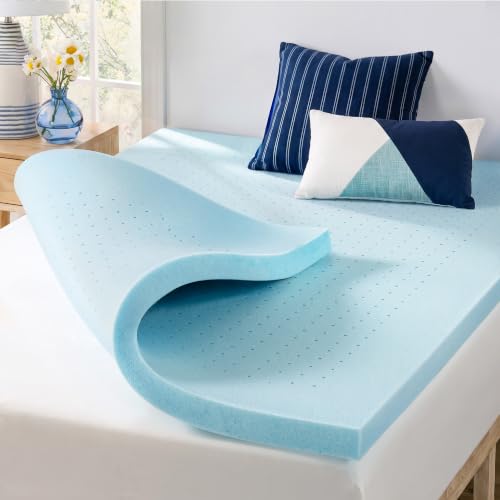
This 1.5-inch topper softens a firm sleep surface with gel-infused, ventilated memory foam designed to disperse heat and cushion pressure points. It serves well as a low-profile upgrade for dorm beds or guest rooms needing a slight comfort boost.
Pros
- Ventilated structure enhances airflow across the mattress
- Gel infusion helps draw away trapped body heat
- Lightweight build makes setup and positioning easy
- CertiPUR-US certified memory foam construction
- Backed by a 3-year manufacturer warranty
Cons
- Slim 1.5-inch profile provides limited deep cushioning
- Lacks an included protective fabric cover
Comprehensive Strategies for Cooling Down Memory Foam Beds
Solving excessive heat retention on a viscoelastic bed requires targeted changes to your sleep setup rather than immediately discarding your mattress. Memory foam responds to body temperature and localized weight by design, which produces outstanding contouring comfort but frequently traps radiant heat. By understanding how foam density, bedding materials, and foundation airflow interact, you can create a noticeably cooler sleep microclimate while preserving proper spinal support.
Understanding Why Traditional Memory Foam Mattresses Trap Heat
Viscoelastic polyurethane foam softens in direct response to applied body heat and physical weight. This natural thermal reaction enables the material to cushion prominent joints such as the hips and lumbar zone, but it also collapses cellular air pathways. When these internal air pockets close, warm air generated by your metabolic process remains locked directly against your body. Without continuous convective airflow, thermal energy steadily accumulates throughout each sleep cycle.
The depth of physical sinkage also plays a significant role in overall microclimate regulation. Sleepers who rest on plush foam beds sink further into the comfort layer, which substantially increases the total foam surface contacting their skin. This increased surface contact acts as an insulating barrier, preventing surrounding room air from circulating across the body. In contrast, firmer sleep surfaces keep the torso positioned closer to the top plane, allowing natural ventilation to dissipate rising heat.
Foam density further dictates how much warmth a mattress retains over several hours of rest. High-density viscoelastic foams offer outstanding durability and motion isolation, but their tight molecular composition inherently restricts passive air transfer. Lower-density foams and open-cell formulations allow air to move more freely, though they may soften faster over extended use. Recognizing how foam density and sinkage affect temperature retention is the first step toward correcting sleep warmth.
Upgrading Your Sleep Surface with Ventilated and Gel-Infused Toppers
Adding a targeted cooling topper serves as an effective barrier between your body and a heat-retaining mattress core. A specialized comfort layer introduces fresh ventilation channels without requiring you to replace your entire bed. The Best Price Mattress 1.5 Inch Ventilated Memory topper utilizes engineered perforations throughout the foam structure. These small vertical channels facilitate continuous air movement, giving body heat a clear exit route rather than trapping it directly under your sheets.
Conductive infusions represent another practical engineering solution for surface heat accumulation. Infusing gel particles or liquid gel into viscoelastic foam helps disperse initial thermal energy across a broader surface area. While passive gel infusions eventually reach ambient equilibrium, they actively resist the sudden temperature spikes that wake sleepers during the first several sleep cycles. Furthermore, toppers constructed with CertiPUR-US certified materials ensure that the foam is manufactured without harmful ozone depleters or heavy metals.
Hybrid topper designs can also blend contouring support with physical ventilation. The WhatsBedding 4 Inch Memory Foam Mattress Topper combines supportive gel memory foam with shredded fill and a breathable, quilted pillow top cover. The segmented dot quilting keeps internal materials evenly distributed, preventing clumping while providing cushion along critical pressure zones. In addition, integrated anchor elastic straps secure the topper firmly to mattress corners, preventing shifting that might otherwise restrict natural surface airflow.
Selecting Breathable Sheets and Natural Fiber Bedding
The textiles resting directly against your skin play an equally vital role in moderating sleep temperature. Synthetic bedding materials such as polyester microfiber and tightly woven nylon create an impermeable thermal shield over your bed. Even if your mattress features open-cell foam or gel infusions, non-breathable sheets will trap moisture and heat before it ever reaches the foam. Replacing synthetic sheets with long-staple cotton percale, linen, or bamboo viscose creates a permeable layer that allows your body to vent naturally.
Thread count is another specification that requires careful evaluation when selecting cooling bedding. Extremely high thread counts often indicate tightly packed threads that severely restrict air permeability. Opting for a lightweight percale weave with a moderate thread count promotes steady air circulation across your skin. Linen also serves as an outstanding natural option due to its wide weave structure and exceptional moisture-wicking capabilities.
Mattress protectors require similar scrutiny because traditional waterproof backings frequently trap body heat. Non-breathable vinyl or plastic protectors block liquid spills effectively, but they also seal off the airflow channels of your mattress topper. Modern breathable protectors employ micro-porous membrane barriers that repel fluids while permitting vapor and heat molecules to escape. Pairing a breathable protector with natural fiber sheets maximizes the cooling capabilities of your underlying foam layers.
Improving Airflow Beneath Your Mattress Foundation
The base beneath your mattress significantly impacts how effectively air circulates through the entire sleep system. Solid platform bed bases, plywood bunkie boards, and unvented box springs restrict bottom ventilation, trapping humidity and heat inside the core. When internal moisture and thermal energy cannot escape through the underside, heat radiates back upward toward the sleeping surface. Switching to a slatted bed foundation allows air to draft naturally underneath the mattress, drawing excess warmth away from the foam layers.
Slat spacing is a critical specification for both airflow and structural mattress support. Slats positioned approximately two to three inches apart provide sufficient open area for convective air movement while preventing foam sagging. If slats are spaced wider than three inches, the foam may bulge downward, potentially damaging internal layers and voiding manufacturer warranties. Solid foundations can also be modified by using perforated support slats or slatted bunkie boards to reintroduce essential ventilation.
Elevating your bed frame higher off the floor can also improve general thermal performance. Beds placed directly on the floor or situated over dense carpeting suffer from stagnant air pockets and increased dust accumulation. Raising the frame allows ambient room drafts to move beneath the bed, creating a passive cooling chimney effect. Sleepers seeking tailored ergonomic comfort can also investigate adjustable surface support systems to achieve customized spinal elevation without compromising essential perimeter and base airflow.
Adjusting Sleep Posture and Body Weight Distribution
Your preferred sleep posture directly influences how deeply your body compresses the mattress comfort layers. Strict side sleepers exert high pressure across localized areas like the shoulders and hips, pushing deep into the viscoelastic foam. This concentrated sinkage creates deep indentations that wrap around the joints, effectively trapping radiant body heat. In contrast, back and stomach sleepers distribute their weight across a wider surface area, which reduces deep foam encapsulation.
Body weight categories also shift how warm a memory foam bed feels across the night. Sleepers weighing over 230 pounds naturally experience deeper sinkage into plush foam layers, increasing surface contact and thermal buildup. Lighter individuals weighing under 130 pounds remain higher on the surface, which exposes them to more circulating room air. Heavier individuals often require firmer surface support or thinner, high-density toppers to prevent excessive sinkage and maintain open air paths around the torso.
Utilizing strategic body pillows made with breathable materials can relieve localized heat concentrations. Placing a breathable pillow between your knees while side sleeping helps keep your hips in neutral alignment while reducing skin-to-skin contact that amplifies warmth. Pillows filled with shredded foam, natural latex, or organic cotton promote continuous ventilation compared to dense solid foam pillows. Managing how your body contacts the bed reduces localized heat buildup without forcing you to abandon your natural sleeping posture.
Optimizing Ambient Bedroom Climate and Air Circulation
Ambient room conditions directly influence how viscoelastic memory foam behaves throughout the evening. Because memory foam is temperature-sensitive, a warm bedroom causes the foam to soften excessively and sink further under body weight. Maintaining an ambient room temperature between 60 and 67 degrees Fahrenheit encourages both deeper sleep and optimal foam firmness. Keeping your bedroom slightly cool prevents the mattress from collapsing into an overly warm, contouring trap.
Active air circulation within the room helps pull heat away from the upper surface of your bedding. Running a ceiling fan on a low setting or positioning an oscillating fan toward the bed creates steady air displacement. This continuous air movement accelerates evaporative cooling across your skin, preventing sweat from saturating the mattress cover. Even cracked bedroom windows during cooler evening hours can introduce refreshing air drafts that disperse trapped room heat.
Managing indoor humidity levels is another vital factor in maintaining a cool sleeping microclimate. High relative humidity prevents body perspiration from evaporating efficiently, leaving you feeling damp, sticky, and overheated on foam surfaces. Utilizing a bedroom dehumidifier during humid summer months maintains dry air, which dramatically enhances personal evaporative cooling. A dry, well-ventilated bedroom environment enables the cooling features of your mattress topper and bedding to function at peak efficiency.
Avoiding Common Mistakes That Restrict Mattress Breathability
Many sleepers unintentionally worsen heat retention by adding thick, non-breathable bedding accessories. Placing heavy weighted blankets, dense polyester comforters, or synthetic mattress pads over memory foam traps rising warmth directly in your immediate sleep zone. Heavy quilts press down on the foam, compressing the comfort layers even further and extinguishing natural air channels. Swapping out thick winter duvets for layered, breathable blankets allows you to regulate your warmth incrementally throughout the night.
Another frequent misstep involves improper mattress placement against bedroom walls or bulky furniture. Positioning a bed tightly into a corner restricts cross-ventilation, creating stagnant heat zones along the enclosed mattress sides. Keeping your bed situated with several inches of clearance from surrounding walls encourages free convective airflow on all perimeters. This simple spatial adjustment prevents heat from collecting in stagnant corners around your sleeping space.
Neglecting regular mattress maintenance can also impair long-term breathability and material performance. Over time, dead skin cells, ambient dust, and body oils settle into fabric weaves and foam pores, gradually restricting open-cell airflow. Vacuuming your mattress cover periodically and using a breathable, washable protector keeps ventilation channels clean and unobstructed. Furthermore, rotating your mattress or topper 180 degrees every few months ensures even wear and prevents deep body impressions from forming permanent thermal wells.
Practical Verification and Long-Term Thermal Maintenance
Confirming the effectiveness of your cooling adjustments requires observing your comfort across several consecutive sleep cycles. When your mattress microclimate is balanced, you should experience minimal tossing and turning, zero morning dampness, and consistent joint relief. If you still encounter persistent warmth, systematically verify that each layer of your sleep setup is truly breathable. Check your sheets, protector, topper, and foundation to ensure no hidden synthetic barrier is obstructing airflow.
When introducing a new topper, remember to follow proper expansion and decompression guidelines before regular use. Compressed memory foam products often require 24 to 72 hours in a well-ventilated space to expand to their full profile height and release initial off-gassing odors. Allowing the foam to expand completely ensures that perforated airflow channels and open-cell structures open fully, maximizing their intended breathability. Patience during the setup phase guarantees that your cooling upgrades perform as designed over their entire lifespan.
By combining ventilated toppers, natural bedding, adequate base airflow, and optimal room climate control, you can fully resolve memory foam overheating. These practical adjustments allow you to enjoy deep pressure relief and proper spinal alignment without compromising temperature neutrality. Taking proactive control of your sleep environment ensures cool, restorative rest night after night.
About the author
Jeremy Klein is a sleep-product tester specializing in mattress evaluation, testing methodology and data collection. His experience across mattresses, pillows and bedding gives him a practical understanding of support, comfort, materials and performance factors that matter when comparing sleep products.