
What Is a Good Mattress? A Practical Guide
What is a good mattress depends on support, pressure relief, and sleep position. Compare practical options for November 2026.
 By Brad Nehring
Updated November 6, 2026

Waking with a stiff lower back or a sore shoulder can make it hard to tell whether your mattress is too firm, too soft, or simply mismatched to how you sleep. A useful answer to what is a good mattress starts with fit: the surface should cushion pressure points while keeping your spine in a comfortable, neutral position. Body weight and sleep position both affect how a mattress feels, so a label such as “firm” is not a complete description of comfort.
The options here use hybrid designs, pairing foam comfort layers with coils. That construction can offer contouring alongside a more responsive feel, while pocketed coils may help limit motion between sleeping partners. The product descriptions also list certifications and, for one mattress, a lengthy sleep trial, but those details are not a substitute for checking current terms directly with the seller. If your main concern is spinal support, our mattress advice for stomach sleepers explains why sleep posture matters to mattress selection.
Use the specifications as a starting point, not a promise of pain relief or universal comfort. A sleeper’s body, preferred position, bedroom temperature, and bed frame all influence the experience. For broader context about nighttime comfort concerns, see our guide to mattress considerations for nighttime relief.
Top Products
| Award | Product | AMG Score About AMG ScoreThe AMG Score is our own rating from 0 to 10, based on performance, design and build, ease of use, and value. It reflects independent research and is never influenced by manufacturers, retailers, or affiliate commissions. Learn more › | |
|---|---|---|---|
| Best Overall |
BedStory 14-Inch Queen Firm Hybrid Mattress
|
8.8/10 | Buy |
| Best Value |
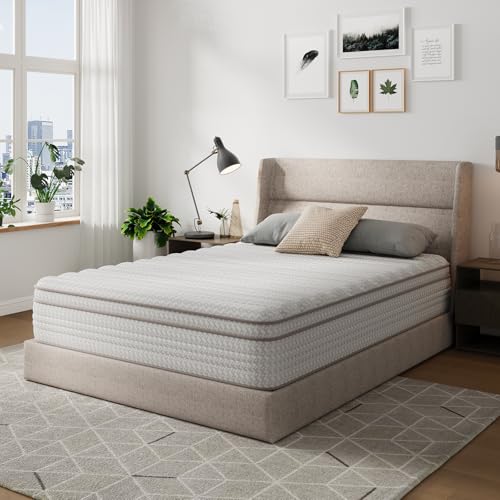 Novilla 14-Inch California King Hybrid Mattress |
8.3/10 | Buy |
BedStory 14-Inch Queen Firm Hybrid Mattress
The BedStory 14-Inch Queen Hybrid Mattress pairs a plush quilted Euro top with an 800-plus pocket coil core using heavy-duty 2.0mm steel springs for robust firm support. With gel-infused cooling foam and certified fiberglass-free construction, it offers dependable lumbar posture alignment and motion isolation tailored for back, stomach, and average-to-heavyweight sleepers.
Pros
- Heavy-duty 2.0mm pocket coils provide exceptional pushback support for back and stomach sleepers
- Certified fiberglass-free build with CertiPUR-US and OEKO-TEX certifications ensures peace of mind regarding indoor air quality
- Open pocketed coil system and gel-infused comfort foam deliver far better airflow than dense all-foam alternatives
- Substantial 14-inch high-profile aesthetic with a cushioned Euro top for immediate surface comfort
- Generous 365-night manufacturer home trial and 10-year warranty coverage
Cons
- Heavy unboxing weight of over 100 pounds makes moving and positioning the mattress a two-person job
- Firm coil tension may feel too unyielding for lightweight side sleepers needing deep shoulder and hip sinkage
- High 14-inch profile requires deep-pocket fitted sheets and may make bed entry taller on high platform frames
Novilla 14-Inch California King Hybrid Mattress
The Novilla 14-Inch California King Hybrid pairs contouring foam with responsive SmartS coils and a breathable AirBreeze cover for balanced pressure relief and motion isolation. It is a solid, fiberglass-free choice for side and back sleepers seeking tall profile cushioning without breaking the bank.
Pros
- Substantial 14-inch high-profile hybrid design cushions major pressure zones across various sleeping postures.
- Completely fiberglass-free fire protection paired with CertiPUR-US foam and OEKO-TEX fabric certifications.
- AirBreeze breathable knit cover and coil airflow help reduce heat buildup compared to dense all-foam beds.
- Reinforced edge support maintains a usable sleep perimeter and prevents roll-off.
- No box spring required, allowing direct placement on compatible platform beds and foundations.
Cons
- Substantial 63-plus pound packaged weight makes solo room navigation and unboxing difficult.
- Requires up to 48 to 72 hours for compressed foam corners to reach full 14-inch loft.
- Initial mild manufacturing odor upon unsealing requires good room ventilation for a few days.
What makes a mattress a good match?
A good mattress supports the body without creating uncomfortable pressure or allowing the hips and shoulders to sink so far that the spine feels strained. There is no single construction or firmness that works for everyone. A mattress can have useful features on paper and still feel wrong to a particular sleeper, especially if its firmness does not suit that person’s weight and usual position.
Start by thinking about the problem you want to solve. Side sleepers often need enough surface cushioning around the shoulders and hips, while back sleepers commonly look for support that keeps the pelvis from dropping excessively. Stomach sleepers may prefer a more supportive surface that limits sinking around the midsection. Combination sleepers may value a mattress that is easier to move across, though personal comfort remains the deciding factor.
Firmness labels are useful, but incomplete
Firmness is usually described with words such as plush, medium, or firm, but brands do not necessarily use those labels in the same way. A numerical scale from 1 to 10 can help buyers compare descriptions when a seller provides a rating, but neither product listing here supplies a specific score on that scale. Avoid assigning one based only on the word “firm” or on the mattress height.
Body weight changes how deeply someone sinks into a comfort layer. A lighter sleeper may experience a mattress as firmer because they compress it less, while a heavier sleeper may feel more of its cushioning and underlying support. Sleep position matters just as much: a firm surface that feels supportive to one back sleeper may create too much shoulder pressure for a side sleeper.
Use early comfort as a signal, not a final verdict. Notice whether pressure builds at the shoulders or hips, whether the lower back feels unsupported, and whether changing positions is easy enough for your needs. Persistent pain can have causes beyond a mattress, and a bed is not a clinical medical device. Consider professional medical advice for ongoing or severe symptoms rather than treating a mattress purchase as treatment.
Hybrid construction balances cushioning and response
Both listed mattresses are hybrids, combining foam with a coil support system. Foam can contour around the body, while coils provide a responsive foundation and can allow air to move through the mattress. These are broad construction characteristics, not a guarantee of a particular comfort level or temperature during the night.
The BedStory Queen Mattress 14 Inch is described as a firm hybrid with reinforced pocket springs, multiple foam layers, and a quilted Eurotop. The listing specifies more than 800 individually wrapped steel coils, each described as 2.0 mm, and says they are intended to reduce motion transfer. The description also highlights gel-infused foam and an open-coil design. Those features may interest shoppers seeking a firmer feel, airflow, or reduced partner disturbance, but the listing does not provide independent measurements of those outcomes.
The Novilla 14 Inch California King Mattress is also a hybrid, with SmartS coils, contouring foam, an AirBreeze fabric cover, and reinforced perimeter support according to its description. The manufacturer says the cover is designed to wick moisture and promote airflow, and describes the perimeter as supporting a stable sitting edge. The available details do not include a numerical firmness rating, coil count, or coil gauge, so buyers should not assume those specifications from the product name alone.
Hybrid construction can be a reasonable starting point for people who want some foam contouring without choosing an all-foam bed. Still, the exact feel depends on the materials and how they are layered, details that are not fully supplied for these products. Neither the listed coil specifications nor a mattress profile by itself establishes how supportive the bed will feel for a particular body.
Pressure relief and alignment depend on the sleeper
Pressure relief is about how the surface distributes contact across the body. A surface that feels too firm may leave a side sleeper with concentrated pressure at the shoulder or hip. A surface that allows too much sinkage may make it harder for some sleepers to maintain a comfortable spinal position. These responses vary with body shape, weight, sleep posture, and personal preference.
Think about spinal alignment as a practical comfort check rather than a claim that can be guaranteed from a product description. If you sleep on your side, consider whether your shoulder and hip feel cushioned while your torso remains comfortable. Back sleepers can pay attention to whether the pelvis feels supported rather than noticeably lower than the rest of the body. Stomach sleepers may want to notice whether their midsection sinks enough to create discomfort.
A partner’s position and body weight can also alter the shared surface. Couples may need to weigh pressure relief against motion disturbance and responsiveness. Individually wrapped coils are specified for the BedStory mattress, and the Novilla listing describes SmartS coils, but neither specification establishes how much movement a particular couple will feel. If partner movement is a priority, look for clear return terms and confirm the mattress feel suits both people.
How to compare the listed mattress options
Match construction details to your priorities
BedStory’s listing emphasizes a firm feel, a Eurotop, pocketed coils, motion isolation, and airflow through an open-coil design. Novilla’s description emphasizes a breathable cover, contouring foam, reinforced edges, and a coil system it calls SmartS. These are different sets of advertised features. They do not establish which mattress will be more comfortable, cooler, or more supportive for every buyer.
If you are sensitive to heat, compare the materials and construction rather than relying on a broad “cooling” label. The BedStory description mentions gel-infused foam and an open-coil system; Novilla lists AirBreeze fabric and a hybrid design. Airflow and moisture-management features may be helpful to some sleepers, but room temperature, bedding, sleepwear, and individual heat sensitivity also affect comfort.
Edge support matters when you sit on the side of the bed or use more of the sleep surface. Novilla specifically describes reinforced perimeter support, while the supplied BedStory details do not make the same edge-support claim. That difference may be worth checking if edge stability is a priority. A product description cannot replace a clear return policy if the edge feel does not suit you.
For another perspective on firmness and sleep-position matching, consult this hybrid and foam mattress comparison. Focus on the details relevant to your sleeping habits, and verify that the destination’s model and construction match what you are considering. Product names and versions can change, so confirm specifications on the current retailer or manufacturer page.
Check certifications and safety statements precisely
The supplied BedStory description says the mattress meets CertiPUR-US, OEKO-TEX, and CFR1633 standards, and describes it as fiberglass-free. The Novilla description lists CertiPUR-US foam and an OEKO-TEX cover, and also calls the mattress fiberglass-free. These are product-description claims, not a reason to assume that every component has the same certification or that other models from either brand share these details.
Buyers with material sensitivities should verify the exact model, certification scope, and current documentation before ordering. A certification may apply to a particular material or component rather than the entire assembled mattress. If a flame barrier’s construction is important to you, ask the manufacturer directly rather than inferring its material from a general “fiberglass-free” statement.
Do not unzip or remove mattress covers to investigate internal materials unless the manufacturer explicitly says that is safe and permitted. The supplied product details do not explain how the covers are attached or whether they are removable. Follow the product’s care and safety instructions, and avoid altering the mattress or its internal components.
Consider size, price category, and ownership terms separately
The BedStory option is listed as a queen, while the Novilla option is a California king. Size affects room fit and sleeping space, so measure the bedroom and bed frame before choosing. The two listings are not direct size-for-size comparisons, and choosing between them involves more than construction preferences.
BedStory’s product details list a 365-night trial and 10-year support, while the supplied Novilla details do not specify trial or warranty terms. Treat those statements as a starting point and read the current terms before purchase. Confirm whether the trial has conditions, who handles returns, and what the warranty covers, since those practical details can affect ownership.
Do not assume a trial is risk-free simply because a long period is advertised. Check whether there are minimum-use requirements, pickup arrangements, geographic limits, or other conditions. The available information does not establish Novilla’s trial or warranty policies, and the BedStory description does not explain all possible return procedures. Ask the seller for the complete current terms if those policies influence your decision.
Set up the mattress and judge comfort carefully
Prepare the frame before delivery
Before a mattress arrives, make sure the frame or foundation is stable, level, and suitable for the mattress according to its manufacturer. The supplied product information does not specify slat spacing, adjustable-base compatibility, or detailed foundation requirements for either model. Check the current instructions instead of assuming that a platform, box spring, or adjustable base will be accepted.
A weak or uneven base can affect how a mattress feels and may create problems that are mistaken for a mattress defect. Look for loose frame joints, sagging supports, or a missing center support where the frame design requires one. Do not rely on generic spacing advice as a substitute for model-specific requirements, especially if warranty coverage depends on the foundation.
Plan enough clear floor space to move the boxed mattress safely. Hybrid mattresses can be awkward to handle, so getting help may reduce strain or the chance of damaging the product. Follow the included opening instructions, keep sharp tools away from the mattress fabric, and do not cut into the mattress itself.
Allow for expansion and ventilate the room
Compressed mattresses may need time to regain their shape after opening. The supplied product details do not state an expansion timeline for either model, so use the manufacturer’s instructions rather than a guessed deadline. Keep the room reasonably ventilated during setup if a new-product odor is noticeable, and avoid making claims about a specific off-gassing duration without model-specific guidance.
Check the mattress visually for obvious damage and make sure it is positioned correctly on the approved support surface. If the shape or appearance seems unusual after the stated expansion period, contact the seller or manufacturer before attempting to repair it. Do not remove internal layers or alter the construction to speed expansion or change the feel.
Initial impressions are not always a reliable measure of long-term comfort. Give yourself time to notice how the mattress feels in your usual sleeping position, but do not invent or assume a mandatory break-in period. If the retailer specifies a minimum period before a return, follow those terms and keep records of the purchase and communications.
Use comfort signals, not marketing language
For several nights, pay attention to whether you wake with new pressure at the shoulder or hip, feel unsupported around the lower back, or struggle to change position. Note whether discomfort occurs in one sleep position or across all of them. These observations can help you describe the issue to the seller, but they do not diagnose a medical condition.
Also consider factors outside the mattress. Pillow height can affect neck comfort, bedding can contribute to overheating, and a frame can influence support. Make one small change at a time where practical, so you have a clearer sense of what may be affecting sleep. If pain continues or worsens, seek medical guidance rather than relying on a mattress adjustment alone.
For couples, discuss comfort separately instead of assuming that one person’s preference represents both sleepers. A mattress that feels supportive on one side may feel too firm or too soft to a partner with a different body weight or sleep position. If the available trial permits returns, understand its terms before ordering and confirm that both sleepers can evaluate the mattress within the allowed process.
A practical answer for mattress shoppers
A good mattress is one whose firmness, pressure relief, and support suit your body and normal sleep position, with construction and ownership terms you understand. The two listed hybrids offer different advertised features: BedStory specifies a firm feel, pocketed coils, gel-infused foam, and a stated trial, while Novilla highlights a breathable cover, SmartS coils, contouring foam, and reinforced edges. Neither description provides every specification needed to predict an individual’s comfort.
Compare the size and supported features first, then verify firmness details, foundation rules, safety documentation, and current return and warranty terms with the seller. Give more weight to a suitable feel and clear policies than to broad promises about cooling or pain relief. If the mattress does not support comfortable sleep in your usual position, use the stated return process or seek appropriate medical advice for persistent symptoms.
About the author
Brad Nehring is an experienced sleep-product tester and writer who has spent nearly a decade evaluating mattresses and related sleep products. His expertise centers on product performance, comfort, construction and real-world usability, with an emphasis on helping shoppers understand meaningful differences before buying.