
Will Duct Tape Work on an Air Mattress? Practical Guide for 2026
Will Duct Tape Work On An Air Mattress? Learn why standard glue fails on vinyl in October 2026 and how to seal leaks for proper sleep support.
 By Logan Foley
Updated October 6, 2026
By Logan Foley
Updated October 6, 2026
Waking up in the middle of the night flat on the floor because an inflatable mattress lost air is an infuriating scenario. When an unexpected leak appears, reaching for a household roll of silver tape feels like an obvious quick fix, but sleepers often ask: will duct tape work on an air mattress? While it might seem tough enough to hold heavy objects together, standard duct tape struggles to contain pressurized air against flexible vinyl when subjected to human body weight. Exploring proper solutions like dedicated durable tape for an air mattress quickly reveals why standard household fixes tend to fail so fast.
The fundamental issue lies in how flexible polyvinyl chloride reacts to standard adhesives. Air beds expand, flex, and shift as you turn, creating continuous tensile stress directly over the puncture. Duct tape adhesive simply is not designed to stretch with the mattress or withstand the natural oils found in PVC materials. Investing a small amount of time into proper patching materials keeps your guest setup comfortable and maintains healthy spinal alignment throughout the entire night.
| Award | Product | AMG Score About AMG ScoreThe AMG Score is our own rating from 0 to 10, based on performance, design and build, ease of use, and value. It reflects independent research and is never influenced by manufacturers, retailers, or affiliate commissions. Learn more › | |
|---|---|---|---|
| Best Overall |
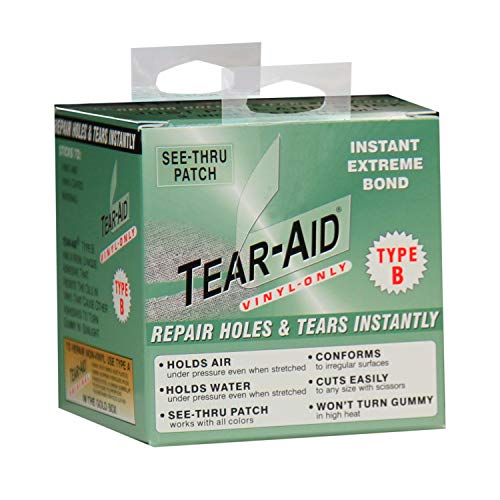
Tear-Aid Type B Vinyl Repair Patch (3" x 5')
|
8.8/10 | Buy |
| Best Value |
 Gosknor 9.8-Foot TPU Repair Tape
|
7.8/10 | Buy |
Tear-Aid Type B Vinyl Repair Patch (3" x 5')
Tear-Aid Type B offers a durable, peel-and-stick repair solution designed specifically to withstand the oils in vinyl and vinyl-coated fabrics. Its flexible elastomer film bonds instantly without liquid glue or heat, making it ideal for fast, long-lasting fixes on smooth or irregular surfaces.
Pros
- Bonds instantly without messy glues or sewing
- Resists punctures, tearing, and high heat
- Clear finish blends smoothly across any color
- UV resistance prevents yellowing over time
- Easily trims to custom sizes with scissors
Cons
- Only adheres to vinyl and vinyl-coated materials
- Requires manual cutting rather than pre-shaped patches
- Includes only two prep pads for a five-foot roll
Gosknor 9.8-Foot TPU Repair Tape
Gosknor provides a continuous 9.8-foot roll of clear TPU tape designed for waterproof patching on air mattresses, pool floats, and outdoor gear. Its transparent finish keeps repairs discreet without requiring liquid adhesives or special tools.
Pros
- Continuous roll allows customizable patch sizes
- Durable and tear-resistant TPU material
- Clear design ensures subtle, low-profile repairs
- Waterproof adhesive seals both air and water
Cons
- Requires scissors to cut patches to size
- Narrow 2.7-inch width restricts coverage on larger tears
- Does not include surface prep wipes
The Reality of Using Duct Tape on Air Mattresses and Long-Term Repair Methods
Standard duct tape will not provide a permanent or reliable seal on an inflatable mattress. While many people turn to whatever is available in the toolbox during an emergency puncture, duct tape is engineered for rigid surfaces rather than elastic, pressurized bladders. Understanding the material science behind flexible plastics, internal air pressure, and specialized repair patches explains why dedicated solutions are necessary for a restful night.
Why Duct Tape Fails Under Pressure on Inflatable Vinyl Beds
Inflatable beds function under dynamic pressure systems that change constantly whenever a person shifts positions. When you lie down, internal air compresses and forces itself outward toward every seam and weak point in the vinyl envelope. Duct tape consists of a woven scrim backing coated with a polyethylene layer and a pressure-sensitive rubber adhesive. This construction is designed for tensile strength across static surfaces, not for holding back airtight pressurized seals.
As you sleep, your hips and shoulders exert concentrated downward force on the mattress surface. This localized pressure causes the flexible PVC fabric to stretch outward, which tugs at the edges of the rigid tape. Because duct tape lacks elasticity, it cannot expand in tandem with the moving vinyl. Microscopic air channels quickly develop along the adhesive perimeter, allowing pressurized air to hiss out gradually over several hours.
The Chemical Breakdown: Vinyl Plasticizers Versus Standard Adhesives
The chemical composition of modern air mattresses presents another major obstacle for ordinary adhesive tapes. Most portable air beds are manufactured from polyvinyl chloride, commonly known as PVC or vinyl. Raw PVC is naturally rigid and brittle, so manufacturers add chemical compounds called plasticizers to give the material its supple, pliable texture. These plasticizer oils continuously migrate toward the exterior surface of the mattress over time.
Standard rubber or acrylic adhesives, such as those found on duct tape, are highly vulnerable to these migrating plasticizers. When the adhesive comes into direct contact with vinyl oils, a chemical reaction occurs that breaks down the adhesive polymer chains. Within hours or days, the glue transforms into a sticky, gummy residue that loses all bonding strength. Not only does the tape peel right off, but it also leaves behind a messy residue that makes applying a proper patch far more difficult.
Emergency Fixes: When Duct Tape Might Buy You a Few Hours
There are rare moments when an unexpected leak occurs late at night during a camping trip and no proper repair supplies are on hand. In such urgent situations, duct tape can serve as a temporary band-aid to reduce the rate of air deflation until morning. Applying multiple overlapping layers over a small pinhole might retain enough air to keep a lightweight sleeper slightly off the hard ground. However, you should expect to wake up periodically to add more air with a manual pump.
If you must use duct tape in a pinch, thorough surface preparation is essential to maximize whatever limited bond the adhesive can form. Clean the area around the hole with a mild soap solution or an alcohol wipe to strip away surface dirt and body oils. Allow the vinyl to dry completely before smoothing down the tape, taking care to press out any air bubbles trapped beneath the adhesive. Even with perfect technique, this temporary fix should be replaced with dedicated air bed leak repair tape options as soon as stores open.
Dedicated Inflatable Patches: Why Elastomer and TPU Outperform Duct Tape
True puncture repair requires materials specifically engineered to tolerate continuous inflation cycles and dynamic movement. Modern patch kits typically rely on thermoplastic polyurethane (TPU) or advanced elastomer films rather than woven fabric backings. These synthetic materials possess high tensile strength combined with remarkable elasticity. When the mattress expands under load, the patch stretches along with the vinyl without pulling away from the surface.
In addition to physical flexibility, specialized repair tapes feature chemical adhesive layers formulated specifically for synthetic polymers. These advanced adhesives resist moisture, temperature fluctuations, and chemical plasticizers without degrading. The bond actively cures against the vinyl substrate, creating an airtight fusion rather than sitting loosely on the surface. This mechanical compatibility ensures that high-pressure internal air cannot force open micro-fissures around the patch.
Engineered Repair Solutions: Comparing Tear-Aid Type B and Gosknor Tape
Looking at purpose-built patch kits highlights the stark difference between household tape and engineered repair technology. For vinyl air beds, products like Tear-Aid Vinyl Repair Patch Kit Type B stand out because they explicitly contain an inhibitor that blocks vinyl oils. As the manufacturer notes, vinyl oils cause standard glues to turn gooey and lose their grip, but Type B is chemically formulated exclusively for vinyl and vinyl-coated materials. Its tough elastomer film resists abrasion, withstands punctures, and stretches smoothly over irregular contours without yellowing in sunlight.
Another viable approach comes in the form of Gosknor Inflatable Waterproof Repair Tape, which utilizes a transparent TPU film. Premium TPU offers robust adhesion, puncture resistance, and seamless sealing against moisture and escaping air. Because the tape is completely clear, it provides an unobtrusive visual repair on colored mattress materials, bounce houses, and pool floats alike. Both products provide instant, mess-free bonding that completely bypasses the need for messy liquid cement or slow-curing solvent tubes.
Step-by-Step Guide to Properly Patching an Air Mattress Leak
Executing a reliable patch requires deliberate technique and patience before inflating the bed back to full capacity. Begin by fully deflating the mattress so the puncture area rests flat on a firm, level surface like a floor or table. Deflation relieves internal tension and ensures the vinyl does not distort or wrinkle while you align the repair material. Having a stable work surface allows you to apply even downward pressure across the entire patch boundary.
Clean the area thoroughly with isopropyl alcohol pads to remove dust, skin oils, and lingering residue from old attempts. Cut your patch tape with rounded corners rather than square edges, as sharp points are prone to catching on bed sheets and peeling prematurely. Peel away the backing paper, position the patch directly over the center of the puncture, and press firmly from the center outward to displace trapped air pockets. Smooth the edges firmly with the back of a spoon or a roller to guarantee full contact before leaving the adhesive to bond.
Identifying Leaks: Finding the Micro-Puncture Before Taping
Before you can apply any patch or tape, locating the precise source of the air leak is the most critical hurdle. Many slow leaks are caused by microscopic pinholes that are completely invisible to the naked eye. An effective method involves fully inflating the mattress and listening carefully in a quiet room while pressing downward on different air chambers. You can also run the back of your hand slowly across the vinyl surface, as the sensitive skin can often detect subtle air currents escaping through pinholes.
For particularly stubborn leaks, the soapy water method remains the gold standard in leak detection. Mix a small amount of liquid dish soap with warm water in a spray bottle or bowl, and gently wipe the solution across suspect seams and flat panels. When air pushes through a puncture, it forms distinct expanding bubbles right over the breach. Once you identify the site, mark it clearly with a permanent marker, wipe the soap off completely, and let the area dry fully before attempting your repair.
Surface Preparation: Tackling Flocked Velour and Factory Seams
Many modern air mattresses feature a soft, velvety flocked top designed to enhance sleeper comfort and prevent fitted sheets from slipping. Unfortunately, applying tape or patches directly over this textured flocking is a guaranteed recipe for failure. The adhesive will merely cling to the fuzzy fibers rather than bonding directly to the underlying airtight PVC layer. Pressurized air will simply leak through the microscopic gaps between individual flocking fibers under the tape.
To fix a puncture on a flocked surface, you must first clear the velvety texture to expose the smooth vinyl underneath. Use fine-grit sandpaper (around 220 grit) or an emery board to gently buff away the flocking fibers right around the hole. Take care not to sand too aggressively, which could thin or weaken the base vinyl membrane. Once the area is smooth and wiped clean of debris, your repair tape can make direct, airtight contact with the plastic substrate.
The Role of Internal Air Pressure and Sleeper Body Weight
Managing internal pressure is vital for maintaining both patch durability and proper sleep ergonomics. When an inflatable mattress is pumped to maximum firmness, the interior air walls experience intense tensile strain. Placing a sleeper weighing over two hundred pounds onto an over-inflated bed spikes that pressure exponentially, creating massive shear stress across patched holes. If the tape used has minimal elastic recovery, the adhesive bond will rupture under this sudden load.
Balancing firmness appropriately protects your repair while supporting neutral spinal alignment throughout the night. An air mattress should feel supportive enough to prevent your hips from bottoming out, but soft enough to cushion the shoulders and maintain a level spinal posture. Over-pressurizing an air bed does not compensate for a failing patch and only accelerates seam separation. If you host overnight visitors regularly, choosing well-constructed guest air bed models with internal coil beams distributes sleeper mass much more evenly than basic single-chamber designs.
Protecting Bed Foundation and Preventing Future Vinyl Tears
Preventing punctures before they occur is always simpler than executing field repairs on compromised vinyl. Most air mattress tears originate from underneath, caused by grit, carpet tacks, sharp subflooring, or pets with untrimmed claws. Always clear the floor space completely before laying down an inflatable mattress, sweeping away any stray debris or small pebbles. Placing a thick moving blanket or canvas drop cloth beneath the mattress adds a protective barrier against abrasive friction.
Temperature swings also influence how vinyl behaves and how patch adhesives hold over time. Cold ambient environments cause PVC plastic to stiffen, making it far more vulnerable to cracking along fold lines during unrolling. When setting up a bed in cold weather or inside a tent, let the boxed mattress warm up to room temperature before unfolding and inflating it. Similarly, avoid storing repaired air beds in hot attics or direct sunlight, as high heat softens adhesive compounds and degrades vinyl elasticity.
Practical Takeaways for Inflatable Mattress Longevity
While duct tape is an iconic household tool for countless quick fixes, an inflatable air mattress is simply outside its functional limits. The combination of migrating vinyl plasticizers, continuous air pressure, and shifting body weight will compromise duct tape adhesive in short order. Relying on dedicated elastomer or TPU repair patches ensures an airtight, long-lasting seal that flexes naturally with the mattress material.
Keeping a small roll of vinyl-compatible repair tape in your storage bag prepares you for unexpected emergencies without the midnight frustration of waking up on a flat floor. With proper surface preparation, gentle buffing of flocked tops, and intentional inflation habits, you can extend the usable lifespan of your inflatable bed for many seasons to come. Consistent maintenance and appropriate patching tools keep your temporary sleep setup comfortable, reliable, and supportive whenever guests arrive.
About the author
Logan Foley is a Certified Sleep Science Coach and experienced mattress and sleep-product researcher. She has personally evaluated hundreds of mattress models, with expertise in comparing construction, comfort, support, materials and sleeper needs to turn complex product differences into practical buying guidance.